Showing posts with label new exercises. Show all posts

The Experiment

After more than half a century of serious training, there are still plenty of exciting new things to try - and new ideas to test drive.


Hail to the Dinosaurs!

I trained last night, and I tried something
new and different.

Not radical new and different - it wasn't
anything like one-legged bunny hops
on a stability ball.

It involved a barbell.

Plenty of plates.

And a power rack.

That's not any kind of revolutionary new
equipment - it's all tried and true - and
many of you already have them or have
access to them.

And I didn't do anything fancy as far
as exercises go.

I did a simple back squat - using a Dave
Draper Top Squat.

But I did something different than ever
before - meaning that it's something
I've never done in over 50 years of
Iron Slinging.

It was an experiment - and it seemed
to work pretty well.

I'll try it with a different exercise the
next time I train - and if it seems to
work, I'll try it with some other move-
ments and see how it goes.

I think it will work pretty well, but I'll
need to put it to the test by training
on it for a reasonable period of time.

After all, that's really the only way to
test anything in the Iron Game.

You try it - for a reasonable period of
time - you see if it works - and you
go from there.

If it passes the test-drive and gets the
official Dinosaur Seal of Approval, I'll
write it up and share it with you.

I've been training for a very long time
now, and I've always been interested
in new and different ways to build
strength and muscle.

Not crazy stuff - but different tweaks
on things that are tried and true and
effective.

Many of our Dinos - perhaps most of
them - do similar experiments. And
frankly, those are the experiments
that keep the Iron  Game moving
forward.


It's barbell, basement, lifter - and an
idea:

"What would happen if I . . . ?"

Or

"I wonder if this would work?"

It keeps the Iron Game going - and
when we join forces and share our
findings, some really good things
can happen. (Which, by the way, is
one of the reasons I publish The
Dinosaur Files newsletter.)

It also - and this is very important -
helps keep our motivation high.
It gives us something a little bit
different to do - which helps keep
our workouts fun, interesting and
exciting.

Anyhow, I'm looking forward to the
next workout - and looking forward
to the second lap of the test drive!

As always, thanks for reading, and
have a great day. If you train today,
make it a good one!

Yours in strength,

Brooks Kubik

P.S. If you're looking for something
new and different - and very effective
for strength and muscle building - try
the program at pages 141 to 143 of
Strength, Muscle and Power:
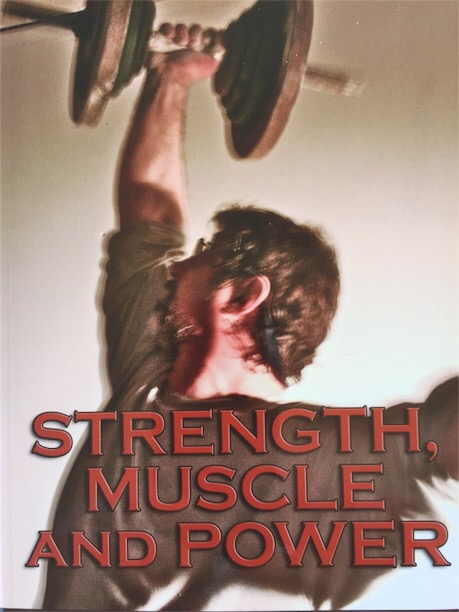


http://www.brookskubik.com/strength_muscle_power.html

P.S. 2. If you're interested in trying
some very interesting things your
fellow Dinos are doing, grab the
May-June issue of The Dinosaur
Files newsletter:


http://www.brookskubik.com/dinosaurfiles-mayjune2018.html

P.S. 3. My other books and courses
are right here at Dino Headquarters:


Hard-copy and PDF

http://www.brookskubik.com/products.html


Kindle

http://www.brookskubik.com/kindle.html

P.S. 4. Thought for the Day

"The Iron Game was built by a long
line of men who asked "What would
happen if I tried . . . ?" 

- Brooks Kubik

A Common Sense Approach to 20 Rep Breathing Squats

20 rep breathing squats are like any other exercise - but people think you have to jump into them as hard and heavy as possible - and completely forget about the basics of common sense progression. It's a very common mistake - but YOU don't have to make it!


Hail to the Dinosaurs!

One of our longtime Dinos is switching from
5 x 5 for his squats to 20 rep breathing squats.

So he asked about where to start and how to
progress.

He's read the standard advice for doing 20
rep breathing squats.

You've probably read it, too.

You take your maximum weight for 10 reps
(which is strange, because how many people
know their maximum weight for 10 all-out
reps in the squat?).

And then you start squatting - with or without
any warm-up sets (which also is strange).

And you force yourself to grind out one rep
after another until you get 20 reps with your
10 rep weight.

The goal is to work so hard your eyeballs
pop out of your head - or you cough up a
kidney - or other similar hyperbole.

Then you fall on the floor in a heap - and
lay there for 20 or 30 minutes, twitching
feebly.

And then you're incredibly sore for several
days - or perhaps a full week - after this one
set on your first "breathing squat workout."

Now, that sounds fine, and it reads well, and
it sells tons of books, courses and magazines.

But is it the best way to start doing 20 rep
breathing squats?

I don't think so.

There's absolutely no reason to kill yourself
the first time you do 20 rep breathing squats.

They're like anything else.

The best way to start is light and easy - get
the feel of the exercise - and give yourself
some time to adapt to the new movement.

That includes - very importantly - time to
rev up your cardiovascular system so you
can handle the unique demands of the 20
rep breathing squat.

I like to do this:

1. Start with 50% of your estimated 10 rep
weight - and do 20 reps with it.

If you're not sure what your 10 rep max is,
then start with something like 100 pounds
and work up from there.

It really doesn't matter where you start -
what matters is what you have on the bar
when you finish the program.

2. Train breathing squats once a week.

3. Add 5 pounds every time you do them,
and gradually and steadily work up to a
heavy weight.

That's the common sense way of doing it.

And quite frankly, it's the very best way of
doing it.

By the way, do you know about Peary
Rader?

He was one of the early pioneers of the
20 rep breathing squat - and one of its
biggest fans.

He started with an empty barbell when
he began doing his 20 rep breathing
squats.

That was good, because he didn't have
to cough up a kidney during his first
workout.

From there. over a couple of years, he
slowly worked up to some serious weight
on the bar - and he gained almost 100
pounds of muscle in two years.

For a complete review and step by step
instruction on sensible progression for
the 20-rep breathing squat - and for
many other sane, sensible, effective
old-school progression systems, grab
a copy of Dinosaur Training Secrets,
Vol. 3.


Hard-copy and Kindle editions

http://www.brookskubik.com/dinosaur_secrets_03.html

PDF edition

See the complete list of PDF books and
courses at our products page:

http://www.brookskubik.com/products.html

Enjoy the course - and always start light and
easy on any new exercise - and work up in
weight slowly, gradually and progressively.

Yours in strength,

Brooks Kubik

P.S. 2. My other books and courses are
right here at Dino Headquarters - including
links to my PDF courses and my Kindle
books:

Hard-copy and PDF


http://www.brookskubik.com/products.html

Kindle


http://www.brookskubik.com/kindle.html

P.S. 3. Thought for the Day:

"Slow cooking makes tasty meals - and it
also builds strong bodies."


- Brooks Kubik

BEFORE YOU LEAVE . . .

We have more than 25 Dinosaur Training books and courses in the Kindle bookstore - here are several of them - head on over and take a look at the others:


Doing New Stuff the Smart Way!

 
The old-school, split style snatch - as performed by World and Olympic champion John Davis. It's a great exercise, but like any new exercise, you need to start light, slow and easy - learn the movement - and develop the necessary flexibility and mobility - before using anything remotely near a heavy weight. 


Hail to the Dinosaurs!

Two quick notes and then we'll talk
iron.

1. Strongman Coffee Mugs

John Wood has some great strongman
coffee mugs at the Retro-Strength
Shop - including some cool new ones
featuring old-school feats of strength:

https://www.retrostrength.com/product-tag/mug/

2. The Dinosaur Files Newsletter


The Dinosaur Files monthly newsletter
has been getting great reviews - and
that's no surprise, because it's the best
darn newsletter out there - covering all
things Dino. Go here to grab the February
issue:

http://www.brookskubik.com/dinosaur-files-february2018pdf.html

Also, if you missed the Oct, Nov,
Dec and Jan issues, you can get
them here:

http://brookskubik.com/dinosaur_files.html

I'm working on the March issue right
now, and we'll get it as soon as we
can - and yes, it's going to be another
good one!

Also - if you want a one-year, 12-issue
subscription to The Dinosaur Files. we can
make it happen. Shoot me an email if you
want to grab a subscription.

3. Doing New Stuff the Smart Way

Social media has impacted everything in
life - and that includes strength training.

I've been noticing a common pattern lately.

Someone does a cool looking new exercise
or feat of strength and posts it on social
media.

Other guys and gals give it a try - and post
their own social media reports.

The reports usually go something like this:

"Tried Exercise X for the very first time today. 

Worked up to 400 pounds.

Plan to work up to 500 in the next two weeks.

Really love this new movement!"

And then someone else tries Exercise X - and
also tries to do 400 pounds - and so it goes,
on and on.

Now, there's nothing wrong with trying new
exercises.

It can be one of the best ways to keep your
motivation and enthusiasm as high as
possible.

And it can certainly help stimulate new gains
in strength and muscle mass.

But it can also backfire.

We all forget one very important thing when
we try a new exercise.

No matter how experienced we are, or how
long we've been training, we are beginners
in that particular exercise.

That means that instead of maxing out or
trying to post a big number the first time
we try it, we should go light and take it
easy - and then train it sensibly and pro-
gressively, making slow but steady
progress.

This is particularly true with old-school
exercises that require skill and technique
to perform - such as the bent press, the
side press, the Steinborn lift, the Jefferson
lift, the Arthur lift, or the two-hands
anyhow.

And it's also extra-important for lifts that
tax the tendons or ligaments - such as
finger lifts - or lifts that hit muscle groups
you may never have trained hard before -
such as the Zercher lift, stone lifting, the
bent press, or the Turkish get-up.

It takes time to learn how to do a lift the
right way - and it takes time to strengthen
and toughen up your body to perform a
new lift at a high level - and it takes time
to build tendon and ligament strength.

So give the process the time it needs.

That's actually more fun anyway - because
you enjoy a long period of linear progress
on the new exercise.

Anyhow, that's a tip that can save you a lot
of aches and pains, and perhaps a number
of missed workouts - and it's also a tip that
can help you have lots of fun with new
exercises.

As always, thanks for reading and have a
great day. If you train today, make it a good
one!

Yours in strength,

Brooks Kubik

P.S. There are plenty of great new exercises
in Dinosaur Dumbbell Training - just be sure
start light and easy and work up in weight
gradually and progressively:


http://www.brookskubik.com/dinosaur_dumbbelltraining.html

P.S. 2. My other books and courses are
right here at Dino Headquarters - including
links to my PDF courses and my Kindle
books:

Hard-copy and PDF


http://www.brookskubik.com/products.html

Kindle


http://www.brookskubik.com/kindle.html

P.S. 3. Thought for the Day:

"Have fun with new exercises - but train
them the smart way - with slow, steady,
progression."


- Brooks Kubik


BEFORE YOU LEAVE . . .

We have more than 25 Dinosaur Training books and courses in the Kindle bookstore - here are several of them - head on over and take a look at the others:


Revealed -- My Dad's Secret Exercise!

Hail to the Dinosaurs!

I'm not sure how it happened, but sometime
when I was 9 or 10 years old, my dad got
interested in canoeing.

We lived in the Chicago suburbs back then,
and we were close enough to "the country"
to find some places that had canoe rentals
on various streams and small rivers. So we
did a fair amount of canoeing on the
weekends. And we had some family vacations
in Minnesota, where we were able to canoe
in the Boundary Waters Canoe Area between
the USA and Canada.

Dad even came up with a special exercise to
help his canoe paddling.

Here's what he did.

He loaded a five foot exercise bar at the
bottom end only -- with about 40 or 50 pounds
of plates -- and then he held the bar as if
he were holding a canoe paddle, with the
weighted end down (i.e., closest to the
ground) -- and then he would perform a canoe
paddling movement for 10 or 20 reps.

In his first set, he'd hold the bar with his
left hand high and his right hand low -- and
he'd "paddle" so that the bar passed his
right side one each rep.

When he finished his set, he'd rest a minute,
and then reverse his grip so his right hand
was high and his left hand was low -- and he'd
"paddle" so that the bar passed his left side
on each rep.

It was a lever bar exercise, although he didn't
call it that. I'm not sure he ever heard of a
lever bar. But he enjoyed his special exercise,
and he found that it helped his canoeing -- and
it sure as heck worked the heck out of his
triceps. (I know, because I did it, too, and
it hammered the tri's!)

There are lots of other interesting things you
can do with a lever bar. Steve Justa used to
do a shoveling movement with a lever bar. Try
it some time. It's tough.

Remember, if you try my dad's canoe paddling
exercise, or if you try Steve Justa's shoveling
exercise, you don't need much weight. The long
lever provides the resistance. So start light
and learn the movement -- and add weight slowly
and in small increments.

Of course, you also can do leverage bar movements
with a dumbbell bar that's loaded at one end only.
Simple wrist curl movements work great. Hold the
lever bar as if it were a hammer, with your arm
hanging straight down at your side, and lever
the bar up and down with wrist power alone. Then
do a second set with the weighted end of the
lever bar behind you. Rest briefly, and then
repeat with the other hand.

Short lever bars also work great for a variety
of different circular movements. They make great
finishers to end your forearm and grip work.

My dad is 85, and he doesn't canoe anymore, but
he still trains. I'll have to ask him if he still
does his canoe paddling exercise.

As always, thanks for reading and have a great
day. If you train today, make it a good one!

Yours in strength,

Brooks Kubik

P.S. For more information about unique forearm and
grip exercises -- and other new and unusual, and
highly effective exercises -- grab a copy of
Dinosaur Training: Lost Secrets of Strength and
Development and a copy of Strength, Muscle and
Power. They'll give you plenty of great ideas:

http://www.brookskubik.com/dinosaur_training.html

http://www.brookskubik.com/strength_muscle_power.html

P.S. 2. For dozens of great bodyweight exercises,
grab a copy of Dinosaur Bodyweight Training:

http://www.brookskubik.com/dinosaur_bodyweight.html

P.S. 3. My other Dinosaur Training books and courses
(and DVD's) are right here:

http://www.brookskubik.com/products.html

P.S. 4. Thought for the Day: "One new exercise can
energize your entire workout." -- Brooks Kubik


John Grimek's Secret Exercise

Hail to the Dinosaurs!

Over the past 45 years -- and wow, that's
nearly half a century -- I've read an awful
lot about building strength and muscle.

But two weeks ago I read something new --
and I learned something I'd never known
before.

John Grimek had a secret exercise to build
pressing power.

He divulged the secret in 1950 or 51 --
and an Iron Game author wrote it down and
reported it in an obscure little publication
which hardly anyone read -- and it wasn't
reported anywhere else (or rather, the
exercise was described here and here,
but NOT the fact that Grimek found it to
be so remarkably effective.

"I could have pressed 400 pounds," said
Grimek.

Now, to give you some perspective, when
Grimek was lifting (the mid-1930's to 1940
or 1941), the World record in the Heavyweight
class in the military press was somewhere
around 320 pounds.

Paul Anderson was the first man to press 400
pounds -- and he did it in the mid 1950's.

But here was Grimek, calmly reporting that
he could have gotten his press to 400 pounds --
at a bodyweight of around 200 pounds -- way
back in the Thirties.

His problem, he explained, was the clean. He
could press more than he could clean. And he
knew he could never get his clean to 400
pounds.

So he lost interest in his pressing program
and his secret exercise, and focused on other
things.

When I read this, I went back and worked
Grimek's secret exercise into my new Military
Press course. That and some other additions
(and more photos) made everything run a little
longer than planned, and so it won't be printed
and shipped until sometime next week -- probably
near the end of the week. But it's going to be
BETTER than I thought it would be -- and it's
going to give you John Grimek's secret exercise
for the press.

So if you already reserved your copy of the
Military Press course, you're in for a real
treat -- and if you didn't already reserve it,
sign up now and be sure to get the
pre-publication bonus when we ship your
order:

http://brookskubik.com/militarypress_course.html

In the meantime, I'm back to work on about thirty
dozen different things -- but every once in a
while I stop and think: "I wonder what would have
happened if Grimek had kept up with that special
pressing program?"

As always, thanks for reading and have a great day.
If you train today, make it a good one.

Yours in strength,

Brooks Kubik

P.S. My other books, courses and DVD's are right
here. Remember, you can save clams on s&h by
ordering two or more at the same time:

http://www.brookskubik.com/products.html

P.S. 2. Thought for the Day: "Look back for knowledge,
and look forward for results." -- Brooks Kubik

Did You Ever Try this Exercise?

Hail to the Dinosaurs!

I hope everyone had a great weekend --
and for those who trained, I hope you had
a great workout!

We're going to cover a great exercise that some
of you may never have tried before. But before
we do that, I need to ask a favor.

I'm thinking about doing something new and
different -- and very exciting -- in 2012:

DINOSAUR TRAINING SEMINARS!

So I need to know:

1. Are you interested in attending a Dinosaur
Training Seminar?

2. What topic(s) would you like me to cover?

3. Where do you live, and what major cities would
work for you for a one day or two day seminar?

4. Do you know of any gyms in your neck of the
woods that might let us do a seminar?

Shoot your responses to me at Dino Headquarters --
and thanks in advance for your feedback!

On the training front, a reader asked "What is
the BEST sandbag exercise for Dinosaurs?"

That's a hard one to answer, because the "best"
exercise for one Dino may not be the best for
another Dino.

But here's a good one.

Set a 50 to 100 pound loosely packed sandbag in
front of a sturdy work bench or the back of a
pick-up truck. You need loose material to hold
onto at the top of the sandbag.

Grab the sandbag by the loose material at the top
of the bag, and lift it in a two hand hammer curl
(with the hands touching, left hand over right hand)
and place it on the bench or platform.

Pause briefly, and then lower it to the floor.

Reverse your grip and repeat.

Do 20 -- 50 -- or 100 reps.

If you don't have a workbench or pick-up truck,
string a rope four or five feet off the ground
and lift the sandbag up and over the rope on each
rep.

If you use the rope, you can drop the bag and then
lift it -- or (tougher) you can hold it just above
the rope and then lower it slowly.

If setting up a rope is too much trouble, then do
this: just curl the bag until your hands touch the
top of your forehead as you lean slightly forward.
Pause for a two count and then lower slowly.

Start with a light sandbag because this one is
really tough. Be ready for some severely fried arms,
forearms, hands, fingers and shoulders.

As always, thanks for reading, and have a great day.
If you train today, make it a good one!

Yours in strength,

Brooks Kubik

P.S. It's Cyber Monday, which means it's time to place
your Holiday orders. Remember, if you want me autograph
a Dinosaur training book or course, all you need to do
is ask! (Use the special instructions section of the
on-line order form.):

http://www.brookskubik.com/products.html


P.S. 2. Thought for the day: "It's not the equipment you
use, it's how you use it that counts!" -- Brooks Kubik

P.S. 3. Don't forget to give me your thoughts and
feedback on Dinosaur Training Seminars!