Showing posts with label training programs for wrestlers. Show all posts

Brand New from Dinosaur Training!

Here's something brand new from Dinosaur Training - with tons of great workouts and training programs!

Hail to the Dinosaurs!

We just released something new
for you.

It's a book that covers strength
training for combat athletes -
meaning that it features training
programs and workouts for:

MMA training

Boxing

Wrestling

Judo

Jiu Jitsu

Karate

Other martial arts

Self defense training

Football

Rugby

And anything else that requires
functional strength and fighting
fitness for combat.

Of course, everyone else can use
the programs and the workouts -
because they build a superb balance
of strength, power, fitness and con-
ditioning.

It's at the Kindle bookstore - and
you can find it right here:

http://www.brookskubik.com/100-combat-tips.html

Sprint on over and grab a
copy!

Yours in strength,

Brooks Kubik


Strength Training for Martial Artists

Sig Klein with some of the magnificent weights from his classic collection. Wouldn't it have been great to train with these legendary barbells, dumbbells and kettlebells?


Hail to the Dinosaurs!

One quick note, and then we'll talk
training.

1. New PDF Courses for Dinos

Last month we added two new courses
to our ever-growing list of PDF courses:

Dinosaur Strength and Power -
Course No. 1 - Hepburn Style Arm
Training


http://www.brookskubik.com/dinosaurstrengthandpower-01.html

Dinosaur Strength and Power -
Course No. 2 - Heavy Partials


http://www.brookskubik.com/dinosaurstrengthandpower-02.html

There are plenty of other Dino courses
available in PDF editions, as well. We
have an entire section for them at our
products page.

For example:

The Dinosaur Military Press
and Shoulder Power Course


http://www.brookskubik.com/dinosaur_militarypresscourse_pdf.html

The Training Secrets of Doug
Hepburn


http://www.brookskubik.com/doughepburncourse_pdf.html

And the new monthly Dinosaur Files
is available exclusively in PDF format:

May-June Dinosaur Files


http://www.brookskubik.com/dinosaurfiles-mayjune2018.html

I know that many of you - particularly
our overseas Dinos - have been asking
for more PDF products - so here they
are!

2. How to Combine Strength Training and
Martial Arts

On the training front, let's talk about a topic
that comes up all the time.

How do you combine strength training and
martial arts or self-defense training?

The question usually comes from older Dinos
who have limited energy and limited recovery
ability. They tend to over-train very quickly if
they train too often. Three strength training
workouts and three martial arts workouts in
one week flattens them.

I can see that. I don't do martial arts, but I
used to wrestle in high school - at top notch
wrestling schools in states with plenty of great
wrestlers. It was brutal stuff - daily practices
that lasted 2 or 3 hours - followed by weight
training workouts 3x a week. Today, at age
61, I couldn't do anything close to that.

And neither can most older guys.

Heck, most younger guys can't do it.

So what do you do?

Try this:

1. Train no more than 4 days per week
total.

a. Two martial arts workouts and two
strength training workouts.

b. Or try two martial arts workouts and
one strength training workout - or the
reverse.

2. Always use abbreviated and ultra-
abbreviated workouts.

a. Focus on the basic, compound exercises
that give you the biggest return for every
second of precious training time.

3. Focus on precise movements and perfect
technique in both your strength training
workouts and your martial arts or self-
defense workouts.

a. Doing the exercise or the technique in
100% perfect form is far more effective
than doing it sloppy - and far easier on
your body.

b. In other words, don't try to "muscle
through" things. Focus on SKILL.

4. Don't try to do the long workouts you
did when you were younger -- and that
goes for the dojo as well as the weight
room.

a. 30 to 45 minutes of focused, concentrated
training is PLENTY.

5. Your martial arts or self-defense training
will double as cardio training -- so don't add
much if any in the way of additional cardio
work.

a. Many older trainees use walking for their
"cardio" or conditioning work. It's not flashy,
but it's effective.

6. Use a simple cycling system for your
strength training workouts so you don't go
hard and heavy all the time. The simple
cycling system in Gray Hair and Black
Iron
is ideal:


http://www.brookskubik.com/grayhair_blackiron.html

7. Use visualization drills to increase the
effectiveness of both your martial arts
training AND your strength training.

a. I cover visualization drills and to do
them in Dinosaur Training: Lost Secrets
of Strength and Development:


http://www.brookskubik.com/dinosaur_training.html

So there you are. Seven tips to help combine
strength training with martial arts or self-
defense training. I hope they help!

As always, thanks for reading and have
a great day. If you train today, make it
a good one.

Yours in strength,

Brooks Kubik

P.S. I almost forgot - heavy dumbbell training
is GREAT for martial artists - see Dinosaur
Dumbbell Training for exercises and
workouts:


http://www.brookskubik.com/dinosaur_dumbbelltraining.html

P.S. 2. Thought for the Day:

"When you train with concentration
and focus, a little work goes a very
long way." 

- Brooks Kubik

BEFORE YOU LEAVE . . .

We have more than 25 Dinosaur Training books and courses in the Kindle bookstore - here are several of them - head on over and take a look at the others:


A Training Secret Direct from the Shao Lin Monastery!

We've got something really good for you today. Take a second and read all about it!
 

Hail to the Dinosaurs!

I want to give you a very important
heads up to start the day.

My buddy John Wood has released
issue no. 3 of The John Wood
Report.


I've seen it - and read it - and it's
pretty darn good.

The first article covers a very cool
grip exercise using an extremely
unusual training tool - and it comes
to you direct from the world-famous
Shao Lin Monastery.

It's for the grip and wrist - and it
is seriously difficult - and will build
some very unusual strength in your
hands, wrists and forearms.

And you probably never heard of it.

And never tried it.

So it's brand new - and brand new
means you have untapped potential
for strength and muscle.

In short, it's going to give you great
results very, very fast - IF you sprint
on over, grab issue no. 3, and read
it.

To make that easy, John is offering a
TODAY ONLY Early Bird Special.

Go here to grab your copy of The
John Wood Report:

https://www.oldtimestrongman.com/johnwoodreport03.html

When you get to the checkout, enter this
special code - to take five clams off the
purchase price:

5182018

That's a full 50% savings for those who
take immediate action.

But act now - because the Early Bird
Special ends at 5:00 PM EST on Friday,
May 18, 2008.

Thanks for reading - enjoy issue no. 3
of The John Wood Report - and have
fun with that great new exercise.

Yours in strength,

Brooks Kubik

P.S. If you end up with Popeye size
forearms, don't blame me - or John -
blame the Shao Lin masters!

Ten Things I Wish I Had Done 45 Years Ago!

I never did front squats when I was in high school - and now I wish I had done them. Here are 10 more things I wish I had done back then.


Hail to the Dinosaurs!

Two quick notes, and then we'll talk
training.

1. The April Dino Files

Do you have the April issue of The
Dinosaur Files?

If not, go here to grab it:

http://www.brookskubik.com/dinosaurfiles-april2018.html

Likewise, if you missed the March
issue, you can find it here:

http://www.brookskubik.com/dinosaur-files-march2018pdf.html

I'm working on the May issue, and
it's looking good - I'll send an email
when it's ready to go.

2. The Retro Strength Shop

John Wood continues to add tons of
great stuff to the Retro Strength
Shop - including some killer Dinosaur
tee shirts, hoodies, coffee mugs and
posters.

Check them out:

https://www.retrostrength.com/shop/

3. Ten Things I Wish I Had Done 45
Years Ago


After awhile, you look back on life and
think about things you've done - and
things you wish you had done.

Here are 10 things I wish I had done
when I was a high school wrestler 45
years ago.

Sure, I trained - a lot - and I did pretty
well - but I would have done a lot better
if I had focused on some of these things.

1. More Dumbbell Training!

I wish I had done more dumbbell training
back then.

Dumbbells rock - especially if you do
old-school dumbbell exercises - the kind
I teach in Dinosaur Dumbbell Training.

2. Cleans and snatches.

I wish I had done more cleans and
snatches.

I'm talking barbell power cleans and
barbell power snatches.

And the power clean and press - or
push press.

These are great for wrestlers - or for
anyone else.

3. Trap Bar Deadlifts.

These may be the very best lower body
exercise for wrestlers.

They mimic the lifting and pulling in a
wrestling match very well.

4. Serious Grip Work.

The kind I cover in Dinosaur Training
and Strength, Muscle and Power.

And for the record - I wish I had started
grip work at age 5 or so.

Or even earlier.

5. Push-ups and Pull-ups.

All kinds of different push-ups and
pull-ups - including those killer double
rope pull-ups in Dinosaur Bodyweight
Training.

6. Never Seen a Muscle Magazine.

Seriously - I wish I had never seen
a muscle magazine when I was a kid.

They hurt more than they helped.

Too much focus on bodybuilding and
bodybuilding workouts.

Very little on strength training for
athletes.

7. Thick Bar Work.

It's perfect for wrestlers.

Great for everyone else - but perfect
for wrestlers.

8. More Sprints.

We ran laps - or went out and jogged a
couple of miles - but sprints would have
been better.

Or, at least, they would have been a very
good addition to the program.

Hill sprints also would have been very
good - except we didn't have any hills
by my high school.

9. Jump Rope.

Jumping rope - the way boxers do it,
using a high quality leather rope - is
a very good, much neglected, totally
under-rated exercise.

Boxers do it all the time, and that should
tell you something.

10. Taken a Chance.

There was a cute little girl in the front row
of my English class.

I should have taken a chance and asked
her out.

Because, after all, that's what really
matters in life.

Taking a chance - and seeing what
happens.

Applies to lifting - and to any kind of
training - and to life in general.

The Wrap-Up

So there you have it.

Ten things I wish I had done differently
back in high school.

But guess what - I ended up doing 9 out
of 10 of them - and even if I never asked
out the girl in English class, I did ask Trudi
out - and that worked out pretty well.

Anyhow, as always, thanks for reading
and have a great day.

If you train today, make it a good one!

Yours in strength,

Brooks Kubik

P.S. I mentioned a couple of great books
in today's post. You can find them right
here:


Dinosaur Training: Lost Secrets of
Strength and Power

The little blue book they call "The Bible
of Strength Training."

Tons of great training ideas - thick bars,
sandbags, heavy awkward objects, death
sets, single rep training, abbreviated work-
outs, power rack training, and some very
important chapters on the all-important
mental aspects of strength training.

Includes some of my favorite workouts.

A best-seller since 1996.

http://www.brookskubik.com/dinosaur_training.html


Dinosaur Dumbbell Training

Tons of old-school dumbbell exercises -
and over 50 complete workouts.

http://www.brookskubik.com/dinosaur_dumbbelltraining.html


Dinosaur Bodyweight Training

A complete course in old-school body-
weight training - with plenty of killer
exercises - and more than 50 workouts.

http://www.brookskubik.com/dinosaur_bodyweight.html


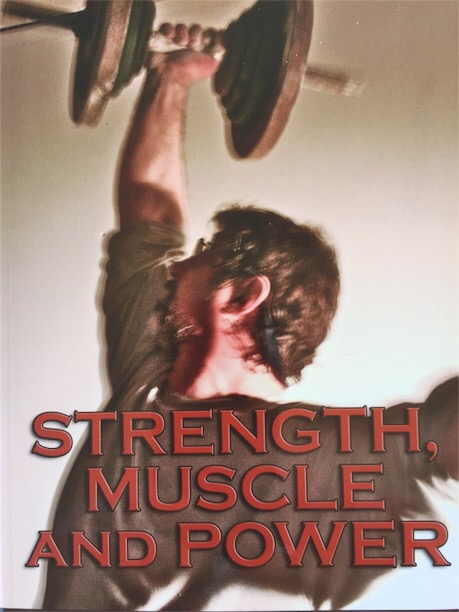
Strength, Muscle and Power

Power rack training, isometronics, rest
pause training, mind power, finishers,
grip work, sandbags, barrels, one-hand
deadlifts, tendon and ligament strength,
home gym training, specialization, some
of my favorite abbreviated and ultra-
abbreviated workouts - and much more!

Includes so many workouts I can't count
them all.

http://www.brookskubik.com/strength_muscle_power.html

P.S. 2. Thought for the Day

"Study the past to build the best
possible future."

- Brooks Kubik

BEFORE YOU LEAVE . . .

We have more than 25 Dinosaur Training books and courses in the Kindle bookstore - here are several of them - head on over and take a look at the others:


Something to Think About

A classic photo of old-time wrestling and weightlifting champion, George Hackenschmidt. He's thick and massive from head to toe - but take a close second look at the thickness of his neck. Almost all of the old-timers specialized in neck training - and it shows!


Hail to the Dinosaurs!

Did you know that many of the old-time
strongmen and weightlifting champions
were also wrestlers?

And that many weightlifting gyms were
also wrestling gyms - and vice-versa?

It's true.

At least, it was true back in Europe.

Not so much in the USA, simply because
there wasn't much weightlifting in the
USA back then.

Back in the day - the 1860's or 1870's
through World War I (or perhaps even
into the 1920's), most of the top strong-
men and weightlifters in Europe also did
plenty of wrestling.

George Hackenschmidt, the famous
"Russian Lion," was both a weightlifting
champion and record holder and a great
wrestling champion.

George Lurich set a world record in the
one-hand jerk - and also won plenty of
wrestling titles.

George F. Jowett was a famous lifter and
strongman - but he also doubled as a
wrestling champion.

Arthur Saxon was one of the most famous
strongmen of the era - but he also did
plenty of wrestling.

The list goes on and on. It includes all or
substantially all of the old-time European
strongmen and weightlifters.

In Europe, the strongmen traveled from
city to city, engaging in hugely popular
weightlifting contests. Back in those days,
weightlifting contests were a popular thing
to see, and people paid good money to
watch an afternoon of top notch lifting.

And people also paid good money to see
top notch wrestling.

So the promoters got smart, and paid
what it took to bring the strongmen to
town - but then doubled their ticket
sales but hosting TWO events with the
same men - a lifting event, and a
separate wrestling event.

One of the results of this was that all old-
time strongmen had truly excellent neck
development.

That's because wrestling builds the neck
muscles - and because wrestlers do plenty
of bridging - and because the old-school,
stand on your feat weightlifting that these
men did was great for building the traps
(which is a necessary part of effective
neck training).

Later, wrestlers and weightlifters drifted
apart.

In the 1940's, Henry Wittenberg, one of
the best amateur wrestlers in the USA, had
to do his weight training in secret so his
coach wouldn't find out about it. (It worked,
too, because Wittenberg won an Olympic
gold medal in 1948 and a silver medal in
1952.)

And when bodybuilding became the big
thing on the weight training side of things,
some men actually stopped training their
neck at all - because they thought it would
make their arms and shoulders look bigger!

Anyhow, I happen to think that the old-
school way of doing things was the best.
Nothing beats a combination of all-around
strength training PLUS specialized neck
training.

It builds a strong, thick, massive, and
impressive neck - one that tells the entire
at the very first glance that YOU are a man
to be reckoned with!

That's the kind of development you want.

A strong, thick, powerful neck - just like
all of the old-timer champions.

To help you do that, I've included an all
new, complete neck training course in
the November issue of The Dinosaur
Files newsletter.

You can find it right here:

http://www.brookskubik.com/dinosaur_files.html

Go ahead and grab it today - and start
the neck course tonight - and build the
very biggest, thickest and most powerful
neck possible.

Yours in strength,

Brooks Kubik

P.S. The November Dino Files is available
in a PDF edition with immediate electronic
delivery.

The PDF is printable, so if you prefer a
hard-copy, order the PDF and print it --
and you'll have an instant hard-copy to
save in your collection.

If you don't have a printer, send me
an email and we'll see what we can do
for you.

Also, if you prefer to subscribe to The
Dino Files rather than order each issue
as it becomes available, shoot me an
email and we'll work up a special
subscription package for you.


How to Build Gold Medal Strength and Power

Hail to the Dinosaurs!

Yesterday, I shared an email about
Olympic gold-medal winner Henry
Wittenberg.

Now I want to tell you a bit about
his training.

Henry Wittenberg was one of the first
amateur wrestlers in the United States
to do heavy weight training.

His coach didn't believe in weight training
or weightlifting. He thought it made you
slow and muscle-bound -- which is what
most coaches thought back in the thirties
and forties. Heck, many coaches still
worried about the muscle-bound myth
when I was in high school back in the
70's!

Henry Wittenberg reasoned that building
great strength would make him a better
wrestler -- and that he'd maintain his
speed and his timing if he kept on doing
his regular wrestling workouts.

It was good thinking. In fact, it was 100
percent correct.

But because his coach didn't believe in
weight training, he had to train in secret.

And because he spent so much time on the
mat, he had to keep his barbell and dumbbell
workouts short and sweet, with no wasted
effort and no wasted time.

So he trained on the basics -- the military
press with barbells, squats, barbell bent-
over rowing, dumbbell curls and dumbbell
presses.

And it worked pretty well. He got REALLY
strong.

He worked up to doing TEN consecutive
reps in the military press with 200 pounds --
and that was his bodyweight -- so it was
pretty darn good.

He could military press 250 pounds for
a single.

That's some serious pressing power.

Whittenberg was strong in other exercises,
as well.

He squatted with 400 pounds, and did 10
reps in the bent-over row with 180 pounds.
And he handled 60 pound dumbbells in his
curls.

Not bad for a man who was training for a
different sport -- and who had to do his
lifting in secret so his coach wouldn't find
out about it!

At the 1948 Olympic Games he trained with
the United States Olympic weightlifting team.
He was so strong that the lifters tried to get
him to change sports!

For extra conditioning, he did roadwork.

Good old-fashioned running.

That, and his wrestling workouts, were all he
did -- and all he needed to do.

Eventually, he made a confession to his
wrestling coach. Admitted that he'd been
lifting weights in secret. At that point, he
was the Olympic champion -- so the
coach let him keep on lifting!

You can do a lot of fancy, modern stuff if
you're a wrestler -- but you also can train
like Henry Wittenberg. You can keep it
hard, heavy and simple.

And if you do, you'll do pretty darn well.

Yours in strength,

Brooks Kubik

P.S. If you want to build the kind of serious,
old-school pressing power and total body
strength that won Henry Wittenberg an
Olympic gold medal in wrestling, then
grab this little monster today:

Kindle e-book

http://www.brookskubik.com/militarypress_kindle.html

Hard-copy

http://www.brookskubik.com/militarypress_course.html

PDF with electronic delivery
See the section for the PDF courses at
our products page - and scroll down to
find the Military Press course.

http://www.brookskubik.com/products.html

P.S. 2. My other books and courses -- and
links to my other Kindle e-books and PDF
training courses -- are right here:

http://www.brookskubik.com/products.html

P.S. 3. Thought for the Day: "The answer to
most questions in life is good old fashioned
hard work." - Brooks Kubik

***********************************************************************************

Speed Training for Older Dinos

Hail to the Dinosaurs!

One of our older (age 60-plus) Dinos
replied to Friday's email by saying
(and I paraphrase):

1. I used to do split style lifting all the
time. (Meaning the split style snatch and
split style clean.)


2. I really enjoyed it.

3. But at age 60 or so, I started to lose
my speed -- so I stopped doing the split
lifts.


4. Question: You're close to age 60. Are
you losing your speed?


While, that's an interesting question, isn't
it?

You know, when I was younger, I was a state
champion in Greco-Roman wrestling.

I won the title by throwing two guys so hard
and so fast I knocked them out.

Each throw took something like half a second
or less.

We locked up -- I pushed into them -- they pushed
back -- and WHAM, I threw them.

Threw them hard, too.

Another time, I won a wrestling match with a
pin in exactly six seconds.

That's six seconds from ref says go to ref
slaps the mat and calls the pin.

And that's about as fast as you can win a
wrestling match.

So I was pretty darn fast when I was younger.

Twenty years later, I was judging a powerlifting
meet. (This was about 25 years ago.)

A 242 pound lifter opened with 550 in the squat.

He made the lift, but as he stood up, something
happened.

From the referee's chair in front of the lifting
platform I saw his eyes roll back -- and I knew
he was about to pass out.

The problem was, the two spotters were on
either side -- and they didn't see his eyes --
and they didn't know that 242 pounds of
lifter and 550 pounds of iron were about to
come crashing down.

I was seated in a chair, 10 or 12 feet away.

I dove forward, racing towards him.

I remember seeing his knees buckle and his
body start to crumple and drop forward.

I remember thinking, "What do I do?"

I remember stepping in front of him, and
hitting him hard and fast with a forearm
shiver across the chest.

I wanted to push him back and stand him up.

I did.

He rolled back to upright-- and then he started
to crumple again, his knees bending and the
heavy bar forcing him down.

I stepped forward, caught him in a bear hug,
and held him up -- and the barbell, too.

And after a second or two -- a very long second
or two -- the spotters realized what was up and
grabbed the bar.

And it's a good thing they did -- because I was
holding 242 pounds of semi-conscious lifter and
550 pounds of iron.

Later, when I thought about it, I realized that it
was NOT possible to move that fast -- to go
from a seated position 10 or 12 feet away to
the forearm shiver to reversing position and
catching the lifter and the bar before he fell.

And all before anyone else knew what was
happening.

But I did it.

So I was FAST when I was younger.

Am I fast now?

I don't know.

I sort of wish that I had timed myself very
carefully back in the day on different lifts --
so I could compare them to where I am
now speedwise.

I'm sure I was faster then -- but I'm not too
bad now, at close to age 60.

There's a reason for that.

Or rather, a couple of them.

And we'll cover them tomorrow -- so be sure to
be looking for tomorrow's email. In the meantime,
grab this little monster if you're interested in
sensible and effective training for older Dinos:

http://www.brookskubik.com/grayhair_blackiron.html

As always, thanks for reading and have a
great day. If you train today, make it a good
one!

Yours in strength,

Brooks Kubik

P.S. We have a ton of great books and courses
available in hard copy, PDF or Kindle editions,
including these little monsters:

1. Dinosaur Training Secrets, Vol. 1.
"Exercises, Workouts and Training
Programs"


http://brookskubik.com/dinosaursecrets01_kindle.html

2. Dinosaur Training Secrets, Vol. 2,
"How Strong Are You?"


http://www.brookskubik.com/dinosaur_secrets2_kindle.html

3. The Training Secrets of John Grimek

http://www.brookskubik.com/grimektraining_kindle.html

4. The Dinosaur Military Press and Shoulder
Power Course


http://www.brookskubik.com/militarypress_kindle.html

P.S. 2. If you prefer hard-copy, all four courses
are available right here at Dino Headquarters:

http://www.brookskubik.com/products.html

P.S. 3. Thought for the Day: "Strong is good,
but strong and fast is better." -- Brooks Kubik

***********************************************************************************

Do Mounties Lift Sandbags?

Hail to the Dinosaurs!

One quick reminder, and then we'll talk training.

1. The October Dinosaur Files

We released the October Dinosaur Files in PDF
format several days ago, and the little monster
is selling like hotcakes - and getting rave reviews
from Dinos around the world.

Go here to grab the little monster:

http://www.brookskubik.com/dinosaurfiles_october2016.html

And, of course - shoot me an email and
let me know how you like this issue - and
what you'd like to see in future issues!

2. Do Mounties Lift Sandbags?

Do Mounties lift sandbags?

Well, actually, they do. So do others in Canadian
law enforcement -- and in the Canadian military.

Almost 10 years ago, I received an email from a
man who taught close combat to Canadian law
enforcement officers. He loved the sandbag training
and other types of heavy, awkward object training
that I teach in Dinosaur Training, and he had his
students use them extensively.

He thought it was perfect for unarmed combat.
And that's not surprising, because Dino-style
sandbag training goes back to old-school
wrestlers -- from the 1890s to the 1930s.

They made great use of sandbags in their
training.

So all martial artists and wrestlers should
take note - and use sandbags as a regular part
of their training!

Anyhow, to continue the story -- I received an
email from a young man in Canada who is
training to get into the Canadian military.

He sent me a link to the Canadian Military
physical fitness tests and asked if Dino-style
training would help him prepare for the test.

Turns out it would.

Why?

Because in 2013 Canada adopted new physical
fitness tests for the military -- and for law
enforcement.

The military test has four parts:

1. Sandbag lift

2. Sandbag loaded shuttles

3. 20-meter bursts

4. Sandbag drag

In short, 75% of the physical fitness test is a
form of Dino-style finishers with sandbags!

So when our reader asked if Dinosaur Training
would help him with the Canadian military's
physical fitness test, the answer is "You're
darn right it will."

I would suggest that our reader follow a
basic abbreviated training program. The
workouts in Dinosaur Training Secrets,
Vol. 1, would be perfect for him:

http://www.brookskubik.com/dinosaur_secrets_01.html

He's currently benching 140 lbs., squatting
130 lbs., and deadlifting 145 lbs. for 3 - 5
reps at a bodyweight of 162 lbs. I'd like
to see him increase all of those training
weights by 50 to 75 pounds.

That should not be hard. He's young, and
in good health, and the gains should come
quickly.

He should finish each workout by doing
at least two of the four parts of the Canadian
military test. He should do the test exactly
the way it is administered -- and he should
work it to the point where he can blast
through the different segments easily and
effortlessly.

He also should train the farmer's walk
once a week. This will carry-over very
well to the military tests.

If necessary, he can start by using lighter
sandbags than he will use when he takes the
test. He can gradually progress to heavier
sandbags as he gets stronger.

And he can probably work up to training
with sandbags that are heavier than what
he will use when he takes the test -- which
should make the actual test pretty darn
easy for him.

His goal is not simply to pass the test --
it is to ace the test.

And when he does, I want to hear about it!

As always, thanks for reading and have a
great day. If you train today, make it a good
one!

Yours in strength,

Brooks Kubik

P.S. I cover sandbag training, finishers and
similar strength and condition builders in
Dinosaur Training, Dinosaur Training Secrets
vol. 1, and Strength, Muscle and Power:

a. Dinosaur Training Secrets, Vol. 1

http://www.brookskubik.com/dinosaur_secrets_01.html

(Note that this one is also available in PDF
and Kindle editions - see our products page
for the links.)

b. Strength, Muscle and Power

http://www.brookskubik.com/strength_muscle_power.html

c. Dinosaur Training: Lost Secrets of Strength
and development


http://www.brookskubik.com/dinosaur_training.html

P.S. 2. For older trainees, I cover a special
variation of "finishers" in Gray Hair and Black
Iron
:

http://www.brookskubik.com/grayhair_blackiron.html

P.S. 3. My other books and courses are right
here at Dino Headquarters:

http://www.brookskubik.com/products.html

P.S. 4. Thought for the Day: "Choose your
adventure -- and train for it!" -- Brooks Kubik

***********************************************************************************

The Secret of Knockout Throws!

Hail to the Dinosaurs!

One quick note, and then we'll talk training.

1. The October Dinosaur Files

The October issue of The Dinosaur Files is
now available in PDF format. Go here to grab
the little monster:

http://www.brookskubik.com/dinosaurfiles_october2016.html

And as always, let me know how you like
this issue!

2. The Secret of Knockout Throws

On the training front, let's talk knockouts.

I spotted a great video in my Facebook feed the
other day.

It was from a Greco-Roman wrestling match --
and it was one of the hardest throws I've seen
in a long time. A real power slam.

I almost felt sorry for the guy who got thrown.

That made me think back 40 years to my wrestling
days.  I won a state championship in Greco-Roman
wrestling, and I did it by knocking out two kids in a
row with hard throws. Both of them were older and
better than me -- but the throws stunned them, and
that was that.

The year before I won a state qualifier in Greco-
Roman wrestling, and once again, won it with a
hard throw. I knocked that guy out, as well. He
was a friend and teammate. I threw him harder
than I meant to throw him.

Our coach called our 185 pounder and our Heavy-
weight King Kong and Godzilla. I wrestled 145
in the scholastic season and 154 in the summer
season. He called me "the little monster". Now
you know why.

But back to those hard throws. They don't
happen without a lot of training.

The secret of hard throws is to get your hips into
the throw.  It's a total body movement. Legs,
back and hips provide most of the power.

Of course, upper body strength is very important
in Greco-Roman wrestling -- or in any kind of
wrestling. But it's the legs, back and hips that
bring home the gold.

That taught me an important lesson, and it's one
that I teach in all of my books and courses.

Train the entire body -- and train the legs, back
and hips harder than anything.

My wrestling days also taught me the importance
of stand on your feet training.

Wrestling is a stand on your feet sport. So it
makes sense to do most of your training on your
feet.

That's a bit like life in general. The human body is
designed for standing, walking and running. That's
why we need to stand on our feet when we train.

It's also why stand on your feet training is important
as we grow older. One of the goals of an older trainee
is to maintain youthful movement patterns, youthful
strength and youthful balance. Stand on your feet
exercises help do that.

That's the genesis of the advice I give you so often.
Do squats and front squats. Do deadlifts and Trap
Bar deadlifts. Do standing presses and other overhead
exercises. If you can, do Olympic lifting. Do lugging
and loading drills. Lift and carry and drag and pull
and throw heavy stuff. Work your legs, hips and back
to the max.

In other words, train to deliver a knockout throw.

And if you're ever on a wrestling mat, be careful. Don't
hurt the other guy!

As always, thanks for reading and have a great day.
If you train today, make it a good one.

Yours in strength,

Brooks Kubik

P.S. The Dinosaur Training Military Press and Shoulder
Power course covers one of the best exercises for
stand on your feet, knockout strength and power.

You can order it your choice of hard-copy,
Kindle e-book, or PDF format:

http://www.brookskubik.com/militarypress_kindle.html

http://www.brookskubik.com/militarypress_course.html

For PDF, see the section for PDF courses
at our products page:

http://www.brookskubik.com/products.html

P.S. 2. Dinosaur Training Secrets, Vol. 1, covers
plenty of great exercises and workouts to build
bone-crushing knockout power. It, too, is available
in your choice of hard-copy, Kindlee-book or PDF
format:

http://www.brookskubik.com/dinosaur_secrets_01.html

P.S. 3. My other books and courses are right here
at Dinosaur Headquarters - and all of them build
real world, stand on your feet strength and
power:

http://www.brookskubik.com/products.html

P.S. 4. Thought for the day: "If you wrestle,
wrestle tough. If you train, train tough."
-- Brooks Kubik

***********************************************************************************

How to Build Gold Medal Strength and Power!

Hail to the Dinosaurs!

Two weeks ago I shared an email about
Olympic gold-medal winner Henry
Wittenberg.

Now I want to tell you a bit about
his training.

Henry Wittenberg was one of the first
amateur wrestlers in the United States
to do heavy weight training.

His coach didn't believe in weight training
or weightlifting. He thought it made you
slow and muscle-bound -- which is what
most coaches thought back in the thirties
and forties. Heck, many coaches still
worried about the muscle-bound myth
when I was in high school!

Henry Wittenberg reasoned that building
great strength would make him a better
wrestler -- and that he'd maintain his
speed and his timing if he kept on doing
his regular wrestling workouts.

It was good thinking. In fact, it was 100
percent correct.

But because his coach didn't believe in
weight training, he had to train in secret.

And because he spent so much time on the
mat, he had to keep his barbell and dumbbell
workouts short and sweet, with no wasted
effort and no wasted time.

So he trained on the basics -- the military
press with barbells, squats, barbell bent-
over rowing, dumbbell curls and dumbbell
presses.

And it worked pretty well. He got REALLY
strong.

He worked up to doing TEN consecutive
reps in the military press with 200 pounds --
and that was his bodyweight -- so it was
pretty darn good.

He could military press 250 pounds for
a single.

That's some serious pressing power.

Whittenberg was strong in other exercises,
as well.

He squatted with 400 pounds, and did 10
reps in the bent-over row with 180 pounds.
And he handled 60 pound dumbbells in his
curls.

Not bad for a man who was training for a
different sport -- and who had to do his
lifting in secret so his coach wouldn't find
out about it!

At the 1948 Olympic Games he trained with
the United States Olympic weightlifting team.
He was so strong that the lifters tried to get
him to change sports!

For extra conditioning, he did roadwork.

Good old-fashioned running.

That, and his wrestling workouts, were all he
did -- and all he needed to do.

Eventually, he made a confession to his
wrestling coach. Admitted that he'd been
lifting weights in secret. At that point, he
was the Olympic champion -- so the
coach let him keep on lifting!

You can do a lot of fancy, modern stuff if
you're a wrestler -- but you also can train
like Henry Wittenberg. You can keep it
hard, heavy and simple.

And if you do, you'll do pretty darn well.

Yours in strength,

Brooks Kubik

P.S. If you want to build the kind of serious,
old-school pressing power and total body
strength that won Henry Wittenberg an
Olympic gold medal in wrestling, then
grab this little monster today:

Kindle e-book

http://www.brookskubik.com/militarypress_kindle.html

Hard-copy

http://www.brookskubik.com/militarypress_course.html

PDF edition

See the links to our PDF products at our
products page:

http://www.brookskubik.com/products.html

P.S. 2. My other books and courses -- and
links to my other Kindle e-books -- are
right here:

http://www.brookskubik.com/products.html

P,S. 3. Thought for the Day: "Train hard,
keep it real, and never give up." -- Brooks
Kubik

***********************************************************************************

Train Hard, Eat Well, Enjoy the Weekend!

Hail to the Dinosaurs!

I hope you're having a great weekend.

It's been pretty good here at Dino
Headquarters.

We had our granddaughters over on Sat
night, which is always an adventure. They
had us outnumbered two to two, but we
managed to survive until their mom came
over and picked them up.

I managed to sneak in a hard workout
yesterday afternon before they arrived,
and followed it up with a great dinner.

My legs are sore today, but that's all part
of the fun of training hard and heavy. And
it entitles me to more great meals today.

We took the girls to the park, and saw a
fitness boot camp in action. It wasn't
Dino, but it was pretty good for that
sort of thing. It looked like everyone
was having fun and working up a good
sweat, and that's a heck of a lot better
than being a weekend coach potato.

The bootcamp even used some sandbags,
although they were small ones.

I wondered if they had any idea that
the old guy pushing his granddaughters
on the swingset was one of the people
who helped put sandbag training on
the map -- and that he got the idea
from an NFL strength coach named
Kim Wood -- and that it dated back to
the old-time strongmen and wrestlers
over 100 years ago -- including Arthur
Saxon and his 300-pound Challenge
Sack that no one else could lift.

Or that George Hackenschmidt trained
for wrestling matches well over 100
years ago by getting down on his
hands and knees, and having a
couple of very strong helpers place
a 600 pound (not a typo, that's SIX
HUNDRED) sandbag on his back so
he could practice resisting a heavy
opponent in a match.

I probably should tell them. They might
move up to heavier sandbags in the
next bootcamp!

Anyhow, I hope it's been a good weekend
for you. If you train today or tomorrow,
train hard, and follow it up with some
great food. Pay attention to recovery
and recuperation. Have fun, and spend
some time with your favorite people.

And remember to synchronize your
watches for 9:00 a.m. on Wednesday
morning -- we're going to launch vol. 3
in our series of new Dinosaur Training
Courses, and I think you're really going
to like it.

Yours in strength,

Brooks Kubik

***************************************

The Secret of Knockout Throws!

Hail to the Dinosaurs!

Two quick notes and then we'll talk training.

1. Physical Culture Radio

I'm doing a regular podcast at 12:00 noon
EST on Thursdays with Carl Lanore. It's called
Physical Culture Radio, and I think you'll really
like it. Catch us live or listen to the download
at your convenience:

http://superhumanradio.com/

It's a great show that covers all things Dino.

2. The Dinosaur Files quarterly

Issue no. 2 is out, and getting great reviews from
Dinos around the world. If you missed it, go here
to grab the little monster:

http://www.brookskubik.com/dinosaurfiles_quarterly.html

If you already have your copy, shoot me an
email and let me know how you like this issue!

On the training front, let's talk knockouts.

I spotted a great video in my Facebook feed the
other day.

It was from a Greco-Roman wrestling match --
and it was one of the hardest throws I've seen
in a long time. A real power slam.

That made me think back 40 years to my wrestling
days.  I won a state championship in Greco-Roman
wrestling, and I did it by knocking out two kids in a
row with hard throws. Both of them were older and
better than me -- but the throws stunned them, and
that was that.

The year before I won a state qualifier in Greco-
Roman wrestling, and once again, won it with a
hard throw. I knocked that guy out, as well. He
was a friend and teammate. I threw him harder
than I meant to throw him.

Our coach called our 185 pounder and our Heavy-
weight King Kong and Godzilla. I wrestled 145
in the scholastic season and 154 in the summer
season. He called me the little monster. Now
you know why.

But back to those hard throws. They don't
happen without a lot of training.

The secret of hard throws is to get your hips into
the throw.  It's a total body movement. Legs,
back and hips provide most of the power.

Of course, upper body strength is very important
in Greco-Roman wrestling -- or in any kind of
wrestling. But it's the legs, back and hips that
bring home the gold.

That taught me an important lesson, and it's one
that I teach in all of my books and courses.

Train the entire body -- and train the legs, back
and hips harder than anything.

My wrestling days also taught me the importance
of stand on your feet training.

Wrestling is a stand on your feet sport. So it
makes sense to do most of your training on your
feet.

That's a bit like life in general. The human body is
designed for standing, walking and running. That's
why we need to stand on our feet when we train.

It's also why stand on your feet training is important
as we grow older. One of the goals of an older trainee
is to maintain youthful movement patterns, youthful
strength and youthful balance. Stand on your feet
exercises help do that.

That's the genesis of the advice I give you so often.

Do squats and front squats. Do deadlifts and Trap
Bar deadlifts. Do standing presses and other overhead
exercises. If you can, do Olympic lifting. Do lugging
and loading drills. Lift and carry and drag and pull
and throw heavy stuff. Work your legs, hips and back
to the max.

You didn't know it, but you were training to deliver
a knockout throw.

So if you're ever on a wrestling mat, be careful. Don't
hurt the other guy!

As always, thanks for reading and have a great day.
If you train today, make it a good one.

Yours in strength,

Brooks Kubik

P.S. The Dinosaur Training Military Press and Shoulder
Power course covers one of the best exercises for
stand on your feet, knockout strength and power.

You can order it your choice of hard-copy or
Kindle e-book:

http://www.brookskubik.com/militarypress_kindle.html

http://www.brookskubik.com/militarypress_course.html

P.S. 2. Dinosaur Training Secrets, Vol. 1, covers
plenty of great exercises and workouts to build
bone-crushing knockout power. It, too, is available
in your choice of hard-copy or Kindle e-book:

http://www.brookskubik.com/dinosaur_secrets_01.html

P.S. 3. My other books and courses are right here
at Dinosaur Headquarters - and all of them build
real world, stand on your feet strength and
power:

http://www.brookskubik.com/products.html

P.S. 4. Thought for the day: "If you wrestle,
wrestle tough. If you train, train tough."
-- Brooks Kubik

**********************************************

How to Combine Strength Training and Martial Arts Training!

Hail to the Dinosaurs!

Three quick notes and then we'll talk training --
as in, how to combine strength training and
martial arts or self-defense training.

1. The Dinosaur Files quarterly

Issue no. 2 is just about ready to go -- we'll
put up a link to let you order the little monster
very soon, probably today or tomorrow.

You're going to love it -- it's a great issue,
with some killer articles.

2. Dinosaur Training Secrets, Vol. 1

Is getting off the chart reviews. Take a look
at them at the Amazon Kindle page and the
Amazon UK Kindle page. If you've read the
little monster, please post a review -- they
realy help us.

You can order the e-book on Kindle, or order
the hard-copy version from Dino Headuarters:

http://brookskubik.com/dinosaur_secrets_01.html

3. Project X

In addition to verything else, I'm working on
a new project for 2015. I call it Project X. Stay
tuned for details.

On the training front, let's talk about a topic
that comes up all the time. I just got an email
from a reader asking about it, and I've had
two more of them in recent weeks.

How do you combine strength training and
martial arts or self-defense training?

The question usually comes from older Dinos
who have limited energy and limited recovery
ability. They tend to overtrain very quickly if
they train too often. Three strength training
workouts and three martial arts workouts in
one week flattens them.

I can see that. I don't do martial arts, but I
train hard with Olympic weightlifting. At age
58, three weekly workouts of 60 to 75 minutes
are plenty. I'd have a very difficult time adding
anything more to it. That's a far cry from the
long hours of daily training when I was a high
school wrestler.

So what do you do?

Try this:

1. Train no more than 4 days per week total.

a. Two martial arts workouts and two strength
training workouts.

b. Or try two martial arts workouts and one
strength training workout -- or the reverse.

2. Use abbreviated and ultra-abbreviated
workouts. The new Dinosaur Training course
has several good ones. So does the next
issue of the Dinosaur Files.

a. Focus on the basic, compound exercises
that give you the biggest return for every
minute of training time.

3. Focus on precise movements and perfect
technique in both your strength training
workouts and your martial arts or self-
defense workouts.

a. Doing the exercise or the technique in
100% perfect form is far more effective
than doing it sloppy -- and far easier on
your body.

b. In other words, don't try to muscle through
things. Focus on SKILL.

c. If you need to do extra flexibility work, then
do it -- religiously!

4. Don't try to do the long workouts you did
when you were younger -- and that goes
for the dojo as well as the weight room.

a. 30 to 45 minutes of focused, concentrated
training is PLENTY for many older trainees.

5. Your martial arts or self-defense training
will double as cardio training -- so don't add
much if any in the way of additional cardio
work.

a. Many older trainees use walking for their
"cardio" or conditioning work. It's not flashy,
but it's effective.

6. Use a simple cycling system for your
strength training workouts so you don't go
hard and heavy all the time. The simple
cycling sytem in Gray Hair and Black Iron
is ideal:

http://www.brookskubik.com/grayhair_blackiron.html

7. Follow the diet and nutrition advice in
Knife, Fork, Muscle. It's an anti-inflammatory
diet, and it will help you recover from your
workouts:

http://www.brookskubik.com/dinosaur_nutrition.html

So there you are. Seven tips to help combine
strength training with martial arts or self-defense
training. I hope they help!

As always, thanks for reading and have a great
day. If you train today, make it a good one.

Yours in strength,

Brooks Kubik

P.S. Here's the link again for my new course,
vol.1 in the series, Dinosaur Training Secrets:

http://brookskubik.com/dinosaur_secrets_01.html

P.S. 2. My other books and courses are right
here at Dinosaur Headquarters:

http://www.brookskubik.com/products.html

P.S. 3. Thought for the Day: "When you train
with concentration and focus, a little work goes
a very long way." -- Brooks Kubik

*******************************************

The Wrestling Workout!

Hail to the Dinosaurs!

In yesterday's post I gave you an
overview about off-season training
for wrestlers, and I promised to
give a specific training program.

So here it is.

Note that this is a good program
for any athlete, and a good program
for all-around strength and power.

Train 3x per week M/W/F or T/Th/
Sat.

In each workout, do the following:

1. General warm-up, lifting specific
stretching and loosening up

2. Standing military press, push
press or jerk -- 5 x 3 progressively
heavier warm-ups followed by 3 x 3
or 3 x 2 work sets.

Note: Perform all warm-ups in letter
perfect form. On the work sets, strive
to use the same perfect form on each rep.
Working sets should be challenging, but
not so heavy that you miss reps or use
bad form to gut the weight up.

3. Any pulling exercise -- snatch or
clean grip high pulls, power snatch,
power clean, squat snatch or squat
clean. Same sets and reps as the
overhead work outlined above.

Note: Choose an exercise that you can
perform in good form. High pulls are
the easiest to learn. If you can do
power snatches or power cleans in
good form, you can use them for your
pulling work. If you know how to
perform squat style lifts, you can
do those. But whatever you do, make
sure you know how to perform the
exercise properly, safely and
effectively. See my point below
about coaching.

4. Olympic style full back squats or
front squats -- same sets and reps as
the overhead work and the pulls.

Note: Once again -- perfect form! No
rounded back, no gutting the weight
up, and no drop and bounce stuff.

5. Five super-sets of pushups and
pull-ups. Use any pushup variation
and any pull-up variation that you
prefer, and base your reps on the
difficulty of the exercises chosen.
See Dinosaur Bodyweight Training for
some great ideas on specialized pushups
and pull-ups.

http://www.brookskubik.com/dinosaur_bodyweight.html

6. Neck work with a head-strap -- 3 to 5
sets of 10 to 15 reps.

7. Gut work of your choice -- 3 sets of 10
to 15 reps (or do plank variations, working
up to one minute in each position)

8. Grip work of your choice unless you
hammered your grip with the pull-ups (e.g.,
with towel pull-ups, rope pull-ups or thick
bar pull-ups) -- 3 to five sets, with the
reps depending on the exercise. See Dinosaur
Training and Strength, Muscle and Power
for some good grip blasters:

http://www.brookskubik.com/dinosaur_training.html

http://www.brookskubik.com/strength_muscle_power.html

If the program is too demanding and too tiring
when combined with your conditioning work and
your wrestling, then divide the exercises into
two different workouts and alternate them on
different lifting days. Do 1, 2, 3, 6 and 7
in one workout, and 1, 4, 5, 6 and 8 in the
next.

The Light, Medium and Heavy system might work
well with this program.

As noted yesterday, be sure to wear Olympic
lifting shoes, and be sure you know how to
perform the exercises properly. A couple
of coaching sessions with an actual, honest
to goodness Olympic weightlifting coach would
be a great idea. You can find a coach in the
USA by going to the USA weightlifting website
and looking for the drop-downs with the listings
of local weightlifting clubs and the drop-downs
for the state chairman. If you live outside the
USA, contact your country's lifting federation.

There's another important point to cover --
several of them, in fact -- and they apply to
all athletes and all trainees. I'll keep the
series going for a few more days. Be looking
for tomorrow's email - it could save your
wrestling (or lifting) career.

As always, thanks for reading and have a great
day. If you train today, make it a good one!

Yours in strength,

Brooks Kubik

P.S. For more strength and power workouts, see
Chalk and Sweat:

http://www.brookskubik.com/chalk_and_sweat.html

P.S. 2. My other books and courses are right
here:

http://www.brookskubik.com/products.html

P.S. 3. Thought for the Day: "Everything I know,
I learned on a wrestling mat or with a barbell
in my hands." -- Brooks Kubik

Off Season Training for Wrestlers!

Hail to the Dinosaurs!

We just finished the end of the high
school and collegiate wrestling season,
and now I'm getting lots of letters and
emails asking about off-season training
programs for wrestlers.

So as a former wrestler, and long time
lifter, let me address the issue.

First and foremost, to be a good wrestler
you need to wrestle. The more mat time,
the better. So wrestling needs to be
part of your regular routine all year
round. 

Second, a wrestler's best hold is being
in great condition. To be a champion,
you need to be able to wrestle several
matches in one day -- all at full speed,
against top competition. And sooner or
later (or maybe often), you'll need to
win the match with an explosive move in
the very final seconds of action. That
takes great conditioning. So make
conditioning work a big part of your
program.

Nothing beats running. Roadwork and
sprints, including hill sprints, are
great. Bodyweight work is also great
for both strength and conditioning.
See Dinosaur Bodyweight Training for
details:

http://www.brookskubik.com/dinosaur_bodyweight.html

Your strength training should be based
on Olympic lifting and related exercises,
supplemented by some bodyweight work. Do
NOT do "bodybuilding." Muscle pumping is
silly for a wrestler, because the last
thing you want to do is "pump up" during
a hard match. And you don't want to do
isolation exercises. You want to train
like an athlete -- meaning, you want to
do total body exercises that teach you
to move with power, precision and
explosiveness.

You'll want to train your neck and traps
extra hard. That means head-strap work
for the neck, along with the bridging
you do as part of your mat drills.

And you'll want to work your grip very,
very hard. A strong grip is one of your
best weapons on the mat.

As a brief aside, stay away from the
machines. They are useless for wrestlers.
I once saw a book that advocated a
wrestling workout where you did nothing
but machine training, and I wanted to
strangle the author. Any athlete who
followed the program would have been
doomed to second or third rate progress,
and that's not good if you're trying to
get into the best shape of your life to
make a serious run at a state or NCAA
title.

But getting back to the exercises --
one of the best things you can do as
a wrestler is to get some one on one
coaching from someone who coaches Olympic
weightlifting. If you live in the USA, go
to the USA Weightlifting website and find
the drop-down that lists the LWC's -- local
weightlifting clubs -- and find a club close
to you and go over and get some coaching.

Olympic lifting is the best thing in the
world for wrestlers, but you need to do it
right. And since you don't have time to
make training mistakes -- not if your goal
is to win a championship before you
finish high school (or college), you
need to get some coaching in the lifts
from someone who really knows them --
and that means a USAW-certified coach.

And on a slightly related note -- wear OL
shoes when you lift. You need the shoes to
support your feet, and you need them to
perform the lifts with proper technique.
Wrestling shoes won't work, and neither
will going barefoot -- and neither will
those Chuck Taylors you own and love.

I'll give a sample wrestling workout
tomorrow, but I wanted to cover some
basic points -- and that's what we
just did.

As always, thanks for reading and have
a great day. If you train today, make
it a good one.

Yours in strength,

Brooks Kubik

P.S. For some great ideas on grip training,
grab a copy of Dinosaur Training:

http://www.brookskubik.com/dinosaur_training.html

P.S. 2. My other books and courses are
right here:

http://www.brookskubik.com/products.html

P.S. 3. Thought for the Day: "Wrestling and
weightlifting go hand in hand." -- Brooks
Kubik