Showing posts with label recovery. Show all posts

How to Maximize Recovery and Recuperation

 
Old-school lifters like Bernie Baron (shown here finishing a heavy clean and jerk in a contest back in the early 1940s) understood the importance of recovery and recuperation much better than most modern trainees. 


Hail to the Dinosaurs!

Many trainees struggle with recovery and
recuperation - in fact, I probably should
say that ALMOST ALL trainees struggle
with it.

It's particularly common among older
trainees - but make no mistake about
it - the recovery puzzle is a problem
for trainees of all ages.

And it's a problem for trainees at all levels
of strength and development - from total
newbies to intermediates to advanced
trainees.

What do I mean by recovery?

Many trainees think that "recovery" means
a special kind of workout you do on your
"off" days - such as kettlebell training,
bodyweight exercises, cardio, lugging
and loading drills, or the farmer's walk.

But that's not recovery.

That's "active rest."

It may or may not help very much - but
that's a topic for another day.

The term "recovery" means your body's
ability to repair the damage done by any
given workout - and to restore itself to
where it was prior to the workout.

After a hard workout, your body needs
at least 48 hours for recovery - and in
many cases, it may need 72 to 96 hours
for full recovery.

That's why old-school training programs
were usually performed three days per
week.

The three day per week schedule gave
you 48 hours recovery time after two
of your weekly workouts - and 72 hours
recovery time after the third workout.

But if you train extra hard and heavy,
two workouts a week may be even
better - because you have more time
to recover after each workout.

And some trainees do very well hitting
the iron every fourth or fifth day.

Peary Rader noted the case of a man
who went on a specialization program
in the deadlift - and trained once every
SIX days - and ended up gaining 20
pounds of muscle and increasing his
strength so much that he was able to
set a world record in the deadlift!

I know, I know - that sounds impossible.

But it happened.

And it illustrates a very important point.

In short, the key to recovery is very
simple: it's giving your body the time
it needs to "bounce back" after each
workout.

Rest time = recovery time.

Meaning that rest days are just as
important
as training days.

In other words - paradoxical as it may
seem - you do better by training less
and resting more . . .

As always, thanks for reading and have
a great day. If you train today, make it a
good one.

Yours in strength,

Brooks Kubik

P.S. For more tips about recovery - and for
workouts and training schedules that help
you maximize recovery, see these books
and courses:

Chalk and Sweat


Gray Hair and Black Iron


Dinosaur Training: Lost Secrets of
Strength and Development


Dinosaur Strength Training Secrets,
Vol. 1


(Also available in PDF and Kindle
editions - see the below link for
my Kindle books.)

Dinosaur Strength Training Secrets,
Vol. 3


(Also available in PDF and Kindle
editions - see the below link for
my Kindle books.)

P.S. 3. Thought for the Day:

"You can train more and gain less - or
train less and gain more. The choice is
yours."

- Brooks Kubik

Brooks Kubik's Kindle Books

http://www.brookskubik.com/kindle.html

We have over 25 books and courses in the Kindle store - including these:


For even more Kindle books by Brooks Kubik, visit:


How to Know if You're Over-Training

Fun times in the outdoor training area at Dino Headquarters. I love training, but I'm always careful not to over-do things - because over-training is a direct highway to Nogainsville.
 
Hail to the Dinosaurs!

One quick note and then we'll talk
iron - as in, how to know if you're
over-training.


1. Two Copies Left.

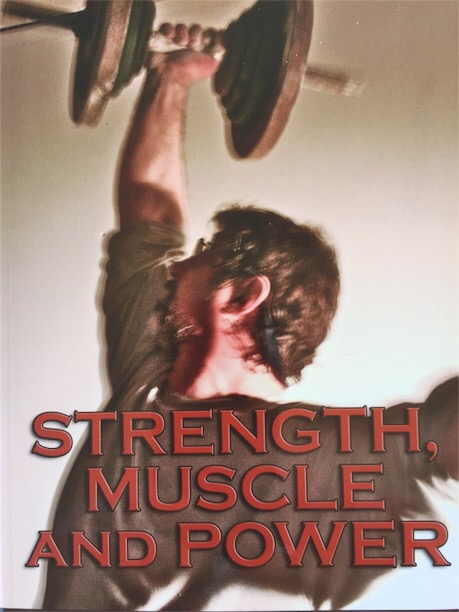
We have TWO copies of Strength,
Muscle and Power left.I'm not doing
a new printing any time soon - and
perhaps not ever - so this is it.

If you want a copy, grab it here -
and do it now, because it's first
come, first served, and then
they're gone:

Strength, Muscle and Power


http://www.brookskubik.com/strength_muscle_power.html

2. How to Know if You're
Over-Training.

I received an email from Sean C., one
of our newer Dinos. He began training
Dino style two years ago, around age
42, and he's made really good progress.

For example, he started with the empty
bar on 20-rep squats, and now he's up
to bodyweight -- which means he's three
or four times stronger than when he
began training.

Sean asked the following question:

"The balance between intensity and
avoiding over-training seems difficult
to figure out.

Going all-out for 60 to 90 minutes,
lifting heavy, concentrating, staying
focused and intense seems to conflict
with not doing too much.

How does one know where to draw the
line?"

That's a good question, and one that I
get at least once a week -- so I thought
it would be a good idea to share my
answer with everyone.

First of all, I think anyone can handle
two or three weekly workouts using a
divided workout program and an
abbreviated training schedule without
running the risk of over-training.

And I think that training for 45 to 90
minutes will work fine -- although for
many Dinos, 45 to 60 minutes is better.

Ninety minutes is a very long workout
if you're pushing hard and staying in
the zone the entire time. Some can
do it - others cannot.

Remember, when I give a range (such
as 45 to 90 minutes for a workout),
that does NOT mean that the upper
end of the range is better.

It's a bell curve. Some people do better
at the lower end of the curve, and some
do better at the upper end -- but most
do best right in the middle.

A 45 minute workout might be best for
20 percent of us -- a 90 minute workout
might be best for another 20 percent --
and a 60 minute workout might be best
for the remaining 60 percent.

I also think that focus, concentration,
and mental intensity are vital to your
training success. You need to use these
tools in every workout. They allow you
to make good gains with a relatively
small amount of training.

Training for 45 minutes with full focus
and deep concentration is far better
than training for three hours of mind-
less, willy-nilly, haphazard work.

To find your own best range of how
long to train, then ask yourself three
questions:

1. Am I making measurable progress,
i.e., increasing what I can do in my
exercises?

2. Am I enjoying my workouts and
having fun when I train?

3. Do I look forward to my workouts?

If the answer to all three questions is
"Yes!" then you're doing just what you
need to be doing -- so keep on doing it.

If the answer is "No," you need to make
changes -- which probably means to lower
your volume or intensity, or to use the
simple cycling systems I outline in Gray
Hair and Black Iron and in Dinosaur
Training Secrets, Vol. 1 and 3. 

In Sean's case, he's making very good
progress, and he enjoys his training --
and he looks forward to each and every
workout. So he should keep on doing
exactly what he's doing.

As always, thanks for reading, and have
a great day. If you train today, make it
a good one!

Yours in strength,

Brooks Kubik

P.S. Go here to grab Gray Hair and
Black
Iron:


http://www.brookskubik.com/grayhair_blackiron.html

P.S. 2. All three of my Dinosaur Training
Secrets courses are available in your
choice of hard-copy, Kindle e-book,
or PDF with immediate electronic
delivery. You can find the links for
the format of your choice right here:


http://www.brookskubik.com/products.html

P.S. 3. Thought for the Day:

"If it works, keep on doing it." 

-- Brooks Kubik
BEFORE YOU LEAVE . . .

We have more than 25 Dinosaur Training books and courses in the Kindle bookstore - here are several of them - head on over and take a look at the others:


The One Million Squats Rule

I've been training for over 50 years, and I plan to keep on training for a very long time. It's a challenge, but challenge is the name of the game.


Hail to the Dinosaurs!

World and Olympic weightlifting champion
Tommy Kono used to say that we all have
a certain number of squats in us, and when
we use them up, that's it.

He didn't mean we're programed to do a
certain number of squats and then our
knees suddenly stop bending and we're
left standing there like the Tin Man in
the Wizard of Oz movie.

No, he meant that we need to take care
of our bodies and not do crazy stuff that
does more harm than good -- and not
waste our reps on things that don't
directly contribute to our  strength
and health goals.

For example, you see a lot of stuff out
there about squatting every day.

Why?

If you can build just as much strength (or
more) on less frequent squat workouts, then
why hit them every day and run the risk of
jacking up your knees, hips or lower back?

Why not allow time for adequate recovery?
It not only helps your training, it helps
preserve and protect your joints.

But you still see guys doing leg workouts
where they do hundreds of reps of different
exercises. 5 x 10 on this, 5 x 12 on that,
 5 x 20 on something else -- and on and on.

Some guys might do 500 or more reps in a
single leg training session.

Why do that if you can get bigger and
stronger with 5 sets of 5 reps or 5/4/3/2/1
or 5 sets of 3 in the squat or front squat?

The lower volume builds more strength
and more muscle -- and imposes much
less wear and tear on your body.

So why do the high volume thing?

Lower reps also allow you to train with
greater focus and much more precision.

You concentrate on each rep. You do it
in perfect form. You become the rep.

In contrast, high volume workouts almost
always become a series of fast, choppy,
sloppy reps performed with little focus
and no attention to the mind-muscle link.
Your brain does nothing more than count
the reps.

But there's a better way to do it. A much
better way.

I've been training for more than 50 years
now, and I plan to keep on training for a
very long time.

I have no idea how many more squats I
have in me, so I'm playing it safe. I keep
the volume low, and I make every rep
count.

I train with total and complete focus, and
I do everything possible to maximize the
mind-muscle link.

Tommy Kono called it "Quality Training."

You focus on quality, not quantity -- on
perfect lifting rather than on volume.

It makes a BIG difference -- and it helps
keep you from using up those squats too
early in your career!

As always, thanks for reading and have a
great day. If you train today, make it a
good one!

Yours in strength,

Brooks Kubik

P.S. Here's a great book about Quality Training
for older Dinos -- as in, anyone age 35 and up:


http://www.brookskubik.com/grayhair_blackiron.html

P.S. 2. My other books and courses are right
here at Dino Headquarters -- along with links
to all of my e-books on Kindle:


Hard-copy and PDF

http://www.brookskubik.com/products.html


Kindle

http://www.brookskubik.com/oldschool_01-kindle.html

P.S. 3. Thought for the Day: 

"Strength training is one of the very
best things you can do for yourself.

Make the most of the opportunity." 

-- Brooks Kubik

BEFORE YOU LEAVE . . .

We have more than 25 Dinosaur Training books and courses in the Kindle bookstore - here are several of them - head on over and take a look at the others:


Does Abbreviated Training Really Work?

I get the ever popular "Does it really work question?" all the time. Here's the answer.


Hail to the Dinosaurs!

Yesterday I received an email from a reader
who asked whether abbreviated training really
works.

Apparently, he's been reading "stuff on the
internet" that tells him he has to follow long,
frequent workouts to make any sort of
meaningful progress.

So let me offer a counter view to the interweb
stuff.

I'll make it very simple. I'll give it you in six short
words -- and they even rhyme, so that will make
it very easy to remember.

If you over-train, you won't gain.

Period, end of story.

And that's what the Interweb whiz kids all forget.

It's not just how how hard you train. It's how you
recover from your training. No recovery means no
gains in strength and muscle mass.

Most trainees start off by making good gains, in
part because they're not strong enough to over-train.

But as they grow stronger and better conditioned,
they start to over-do things. And at that point, their
progress comes crashing to a halt.

Many trainees train for years without making any
progress because they over-do things in the gym
and they are barely able to stay even, much less
to make significant gains in strength and muscle
mass.

Go to any gym in the world, and you'll see this
happen over and over. It probably happens to
99% of the trainees at the typical gym.

And no one seems to be able to figure it out --
which is amazing, because the answer is very
simple and very obvious:

Train less, but train harder and heavier.

So when someone asks me, "Does abbreviated
training really work?" the answer is this:

1. Yes, it does.

and

2. Try it and see for yourself.

And remember , there's an entire army of Dinosaurs
around the world who've found that abbreviated
training brought them the best results of their
lives.

If it worked for them, it will work for you.

As always, thanks for reading, and have a
great day. If you train today, make it a good
one.

Yours in strength,

Brooks Kubik

P.S. My three Dinosaur Training Secrets courses
will get you on the right track for BIG GAINS
with sensible, abbreviated workouts. Grab them
in your choice of hard-copy, PDF or Kindle
e-book:

a. Dinosaur Training Secrets, Vol. 1.
"Exercises, Workouts and Training
Programs"


Kindle e-book:

http://brookskubik.com/dinosaursecrets01_kindle.html

Hard-copy:

http://www.brookskubik.com/dinosaur_secrets_01.html

PDF - see the section for PDF courses on
our products page:

http://www.brookskubik.com/products.html

b. Dinosaur Training Secrets, Vol. 2,
"How Strong Are You?"


Kindle e-book:

http://www.brookskubik.com/dinosaur_secrets2_kindle.html

Hard-copy:

http://www.brookskubik.com/dinosaur_secrets_02.html

PDF - see the section for PDF courses on
our products page:

http://www.brookskubik.com/products.html


c. Dinosaur Training Secrets, Vol. 3,
"How to Use Old-School Progression
Methods for Fast and Steady Gains in
Strength, Muscle and Power"

Kindle e-book:

http://www.brookskubik.com/dinosaur_secrets3_kindle.html

Hard-copy:

http://www.brookskubik.com/dinosaur_secrets_03.html

PDF - see the section for PDF courses on
our products page:

http://www.brookskubik.com/products.htm


TIME SAVER SPECIAL:


Time saver special - Order all three books in the
Dinosaur Training Secrets series a set in the
Amazon Kindle store - or in PDF format at my
website:

Kindle

https://www.amazon.com/gp/product/B016QAEIQE/ref=series_rw_dp_sw

PDF - see the section for PDF courses on
our products page:

http://www.brookskubik.com/products.htm


P.S. 2. Thought for the Day:

 "Train hard and heavy, and then rest and
recover."


-- Brooks Kubik


The Day John Grimek Quit the Iron Game!

 
John Grimek was the best built man of his generation - and he became an Iron Game legend - but he almost quit training one day when he was just getting started. Here's the true story of what happened.


Hail to the Dinosaurs!

Couple of quick notes, and then we'll
talk training.

1. Dinosaur Shirts, Posters and
More


We have some new Dinosaur shirts,
hoodies, muscle shirts, mugs and a
great poster at the Retro Strength
Shop - and, of course, there's a lot
of other fun stuff there - so check
them out and treat yourself to some
old-school swag:

https://www.retrostrength.com/shop/

By the way, if you get one of my new
shirts, hoodies, posters, etc. - be sure
to post a photo of it on Facebook, Insta-
gram, or in my Brooks Kubik - Dinosaur
Training Facebook Group - or at John
Wood's Strength Secrets Facebook
Group.

Your fellow Dinos will want to see it!

2. The April Dino Files

If you don't have the April issue of
The Dinosaur Files strength training
newsletter, go here to grab it:

http://www.brookskubik.com/dinosaurfiles-april2018.html

It's a really good issue - and the May
issue (which I am working on) is going
to be another good one!

3. Pruning the List

I'm going through the email list
and pruning email addresses that
seem to be inactive. I'll try to prune
only those addresses that don't
seem to be following us any more -
or that don't appear to be active
email addresses any more - but I'm
only human, so I'll probably make
some mistakes.

If I delete you by mistake, please
don't take it personally - and sign
back up!

4. The Day John Grimek Quit the
Iron Game!

A lot of guys think that John Grimek
was a total genetic freak - that he
always had it easy - and that every
time he so much as looked at a barbell
he gained a quarter inch on his upper
arms.

But, of course, that's not quite true.
Grimek did indeed have good genetics
for building an old-school bodybuilder's
physique - and good genetics for weight-
lifting and feats of strength.

But it didn't come easily for him.

There was plenty of hard work involved -
and many, many mistakes when he was
just getting started.

One of those mistakes was letting his
youthful enthusiasm get the better of
him.

Trying to force progress faster than his
body would allow.

Doing too much.

Too many workouts.

Too many exercises.

Too many sets.

Too many reps.

In a word, over-training.

Just like we all did - and like many of us
still do.

Yes, John Grimek over-trained as a young
man - and it almost destroyed his career.

Things got so bad that Grimek decided
he had had enough of it - and he quit
training!

Gave it up.

Stopped.

Put the barbell and the weights back in
the big wooden box they were delivered
in - shoved the box into the corner - and
decided to spend his free time swimming
and tanning and lying on the beach to
watch the girls.

But then something unexpected happened.

He started to grow.

He couldn't believe it.

He wasn't even training any more!

He was just taking it easy.


But he was growing.

He measured his arms and they were
bigger than ever before.

And this was after having not gained an
ounce of muscle for a very long time.

He thought it over, and realized that he
had been over-training.

That he needed to do the right amount
of work and no more - the amount that
made him grow - and then STOP and
give his body the time it needed to
grow bigger and stronger.

He got back to training - on a shorter
and saner schedule than the one he
had been following - and the rest, as
they say, is history.

Now, you may not have the genetics
that John Grimek had - but your genetics
may be a lot better than you think.

You'll never know unless you train the
right way - and do what John Grimek
learned to do.

Train enough - but not too much!

As always, thanks for reading and have
a great day. If you train today, make it
a good one!

Yours in strength,

Brooks Kubik

P.S. For more about John Grimek's life
and training, grab this great course:

http://www.brookskubik.com/johngrimek_course.html

It's also available in PDF and Kindle editions
if you prefer those - see the links for PDF
and Kindle courses at our products page
(link below).

2.  My other books and courses are
right here at Dino Headquarters:

Hard-copy and PDF

http://www.brookskubik.com/products.html

Kindle

http://www.brookskubik.com/kindle.html

P.S. 3. Thought for the Day: 

"Genetics matter, but so does sensible
training."


-- Brooks Kubik

BEFORE YOU LEAVE . . .

We have more than 25 Dinosaur Training books and courses in the Kindle bookstore - here are several of them - head on over and take a look at the others: