Showing posts with label rest-pause training. Show all posts

How to Save 45 Clams!

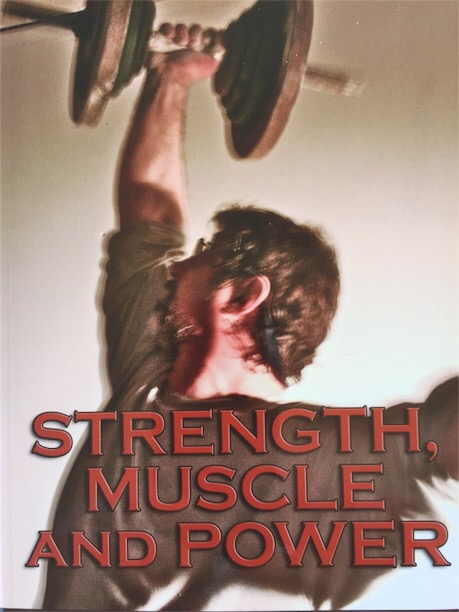
We're down to the very last box of Strength, Muscle and Power - and used copies are selling for crazy-high prices - so if you want to save some serious wampum, grab it now - before it's out of print and you have to pay big bucks for a used copy.


Hail to the Dinosaurs!

I just checked my author's page in
the Kindle bookstore - poked around
the Amazon store for a bit - and was
surprised to see that used copies of
Strength, Muscle and Power are
selling for anywhere from $79.95
all the way up to - get this -
$272.14.

Yep, that's right.

The cheapest USED copies of the
little monster are going for right
under 80 clams to close to 300
clams - and that's a lot of wam-
pum.

Especially when you consider that
I sell it for $34.95.

A difference of 45 clams.

I mention this because we're down
to the very last box of Strength,
Muscle and Power - and I'm not
going to do a new printing any
time soon - and perhaps not
ever.

So you can grab it now for $34.95 -
or you can sit back and wait - and
grab a used copy later on - for
anywhere from $79.95 to that
big sticker price of $272.14.

And, of course, once it's out of
print, the used copies will probably
go up in price.

So if you don't have a copy - or if
you want a second copy for your
collection - or you're looking ahead
to buy a birthday or Christmas gift
for someone - grab it now and save
yourself some serious clams.

Here's the link:


http://www.brookskubik.com/strength_muscle_power.html

Yours in strength,

Brooks Kubik

P.S. It's a great training book, with
tons of workouts - and chapters
on:

Abbreviated Training

Ultra-Abbreviated Training

Grip Training

Sandbag Training

Barrel Lifting

Power Rack Training

Specialization Programs

Powerlifting Workouts

Rest Pause Training

Home Gym Training

Finishers

Thick Bars and How to Use
Them

A Special program for Tendon
and Ligament Strength

And much more.

29 chapters - 356 pages - and so
many hard-hitting workouts I can't
count them.

If you want me to sign your book
for you, just ask for a signature.

There's no charge for an autograph -
it's an honor to be asked for one.

But act now - because we don't have
many left - and I'd really rather you
grabbed it from me at a reasonable
price than from a used book seller
for an off the charts price.

Here's the link again:


http://www.brookskubik.com/strength_muscle_power.html


Going - Going - Almost Gone!


Hail to the Dinosaurs!

We're down to the very last box of 
Strength, Muscle and Power -
and I'm not going to do another
printing anytime soon - perhaps
not ever -so if you want a copy,
grab it now.

It's a great training book, with
tons of workouts - and chapters
on:

Abbreviated Training

Ultra-Abbreviated Training

Grip Training

Sandbag Training

Barrel Lifting

Power Rack Training

Specialization Programs

Powerlifting Workouts

Rest Pause Training

Home Gym Training

Finishers

Thick Bars and How to Use
Them

A Special program for Tendon
and Ligament Strength

And much more.

29 chapters - 356 pages - and so
many hard-hitting workouts I can't
count them.

If you want me to sign your book
for you, just ask for a signature.

There's no charge for an autograph -
it's an honor to be asked for one.

But, as I said, we don't have many
copies left, and when they're gone,
that's it - so if you want one, grab it
now.

Strength, Muscle and Power


http://www.brookskubik.com/strength_muscle_power.html

Yours in strength,

Brooks Kubik


Grab Them While You Can!

We're down to the last box of Strength, Muscle and Power - and I'm not going to do another printing any time soon - so if you want a copy, grab it now. 


Hail to the Dinosaurs!

We're down to the last box of Strength,
Muscle and Power,
and I'm not going to
do another printing for awhile - perhaps
not ever - so if you want a copy, grab it
now:

http://www.brookskubik.com/strength_muscle_power.html

It's a great book that gives you tons of
hard-hitting workouts - including the
exact program I used when I won five
National championships in the bench
press.

It also covers:

power rack training

home gym training

heavy, awkward objects

thick bars

grip training

rest-pause training

specialization programs

building tendon and ligament
strength

abbreviated training

ultra-abbreviated training

and lots more!

Go here to grab the little monster -
and if you want me to autograph it
for you, be sure to ask when you
place your order.

Here's the link again:

http://www.brookskubik.com/strength_muscle_power.html

Yours in strength,

Brooks Kubik


Twelve Keys to Strength and Muscle Mass (Part 4)

 
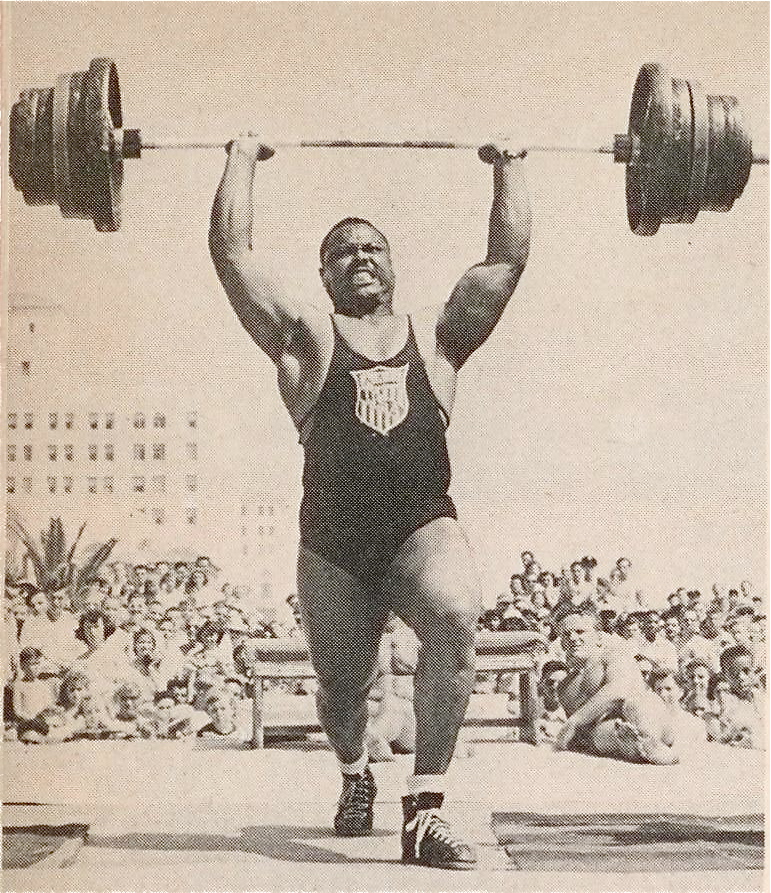
World and Olympic champion John Davis in a classic photo from 1940. Davis weighs around 200 pounds in this photo, and was ranked as one of the strongest men in the world - as well as one of the best developed men in the world. Later, he pushed his weight to 230 pounds and became the Strongest Man in the World - as proven by his string of World and Olympic championships in the Heavyweight class.


Hail to the Dinosaurs!

We'll talk iron in just a minute - but first,
let me cover some important updates.

1. Christmas Orders

There's still time to get a Christmas order
out the door and shipped to you before the
big day - but we're getting down to the
wire.

If you plan to order something for Christmas,
do it NOW - and we'll send it out the door
right away.

Santa's a great guy, and those magic rein-
deer fly pretty fast, but they can always use
a bit of help.

2. Dinosaur File Subscriptions

Speaking of Christmas presents, here's a
good one - that brings you something fun
and informative every month for a whole
year.

It's a one year, 12-issue subscription to
the new monthly Dinosaur Files.

You can purchase a subscription for PDF or (if
you are in the USA) hard-copy.

If you're interested, shoot me an email
and I'll give you the details.

If you prefer to grab each issue as it comes
out, that's fine, too. Go here to grab the Oct
and Nov issues:

http://www.brookskubik.com/dinosaur_files.html

I'm finishing up the Dec issue, and it will be
ready soon. I'll send an email when it's
available.

3. Twelve Keys to Strength and Muscle 
Mass

Here's part 4 in what has turned into a
mini-course on building strength and
muscle mass. This is tip no. 6. If you
missed parts 1, 2 and 3, you can find
them right here at the Dinosaur
Training Blog:

http://dinosaurtraining.blogspot.com/

By the way, I post every email on the
Blog - so if you ever miss an email, go
to the Blog to find it. You can access
the Blog from the drop-down/menu
bar on the landing page of my web-
site.

Tip No. 6 - Rest Pause Training

One of the keys to building strength
and muscle mass is to use more
weight in your exercises.

For beginners, that means you train
progressively and add weight to the
bar on a regular basis.

For intermediate and advanced
trainees, adding weight to the bar
becomes more difficult to do.

And that's where Rest Pause
Training comes into play.

Rest Pause Training was developed
in the 1950's and featured in Peary
Rader's IronMan magazine.

Interestingly, it received almost no
coverage in other magazines - so if
you didn't subscribe to IronMan, you
pretty much missed the boat on this.

The idea was simple.

Instead of doing a set of non-stop,
consecutive reps, you did just one
rep and then paused for 10 to 15
seconds - and then you did the next
rep - and so on, until you completed
the entire set.

Some viewed each set as a series of
singles - which is actually what it was.

By pausing between reps, you were
able to handle more weight in the
basic exercises - which was a very
good thing for building strength and
muscle mass.

In addition, you eliminated the effect
of momentum when you paused be-
tween reps. That meant that you had
to start each rep from a dead stop -
using muscle power alone.

You also eliminated the whole "muscle
pump" thing - which meant you were
doing pure strength training - and yet,
to the surprise of many, you could build
plenty of muscle mass on the Rest
Pause program.

And that's interesting, because everyone
*knows* you need to pump up your muscles
in order to make them bigger - or do you?

The guys who did Rest Pause Training
made big gains in muscle mass without
doing any pumping at all.

And they also built plenty of strength.

It was a great way to train - and it
still is.

I cover Rest Pause Training in Strength,
Muscle and Power - along with some
detailed Rest Pause workouts.Go here
to grab a copy:


http://www.brookskubik.com/strength_muscle_power.html

More to follow  . . .

Yours in strength,

Brooks Kubik

P.S. My other books and courses -
and links to all of my e-books on Kindle
- are right here at Dino Headquarters:

Hard-copy and PDF

http://www.brookskubik.com/products.html

Kindle

http://www.brookskubik.com/kindle.html

P.S. 2. Thought for the Day:

"Old-school training works - and it
works much better than the modern
day stuff."


- Brooks Kubik

BEFORE YOU LEAVE . . .

We have more than 25 Dinosaur Training books and courses in the Kindle bookstore - here are several of them - head on over and take a look at the others:


How to Build Herculean Super Strength

 
Paul Anderson epitomized Herculean super strength. He won the gold medal at the 1956 Olympics.


Hail to the Dinosaurs!

45 years ago, Bradley J. Steiner wrote
a great little book with one of the best
titles in the history of the world:

"Powerlifting and the Development of
Herculean Super-Strength."

Good title, huh?

England's Reg Park was one of the best built men in the world - and one of the strongest men in the world.


In the book, Steiner focused on building
four key areas:

1. Legs

2. Back

3. Shoulder girdle

4. Chest

The theory was, if you built plenty of
strength and muscle mass in those four
key areas, you'd end up with plenty of
strength and muscle mass from head
to toe.

And it's a valid theory. It works. By
focusing on these four critical areas,
you build maximum strength and
muscle throughout your entire body.

In his prime, Brooklyn's John Davis was hailed as the Strongest Man in the World. He won six World weightlifting championships and two Olympic gold medals.


And here's another tip. Or rather, three
of them. These come from me, but I
think Steiner would approve of them:

1. Power rack training

2. Rest-pause training

3. Heavy singles

Why do these help build Herculean
super-strength?

Because they let you train with HEAVY
WEIGHTS.

And make no mistake about it -- heavy
weights are what it takes to build
Herculean super-strength.

That was true 45 years ago - and it's
still true today.

And it will always be true.

Today, tomorrow, and forever.

As always, thanks for reading and
have a great day. If you train today,
make it a good one!

Yours in strength,

Brooks Kubik

P.S. You can learn more about rest pause
training, power rack training and heavy
singles in STRENGTH, MUSCLE AND
POWER:


http://www.brookskubik.com/strength_muscle_power.html

P.S. My other books and courses are
right here at Dino Headquarters:

Hard-copy and PDF

http://www.brookskubik.com/products.html

Kindle

http://www.brookskubik.com/kindle.html

P.S. 3. Thought for the Day: "You
build strength, muscle and power
rep by rep, set by set, pound by
pound and workout by workout."
-- Brooks Kubik


We have more than 25 Dinosaur training books and courses in the Kindle bookstore - head on over and take a look:


How to Improve Your Workouts by 20 Percent

Hail to the Dinosaurs!

Two quick notes, and then we'll talk
iron - and how to improve your
workouts by 20 percent.

1. Dinosaur DVDs at the Iron
League


John Wood has loaded all of my old
Dinosaur Training DVDs at the Iron
League member site - so if you want
to see them, join the Iron League.

Of course, there's a ton of other
great stuff at the Iron League.

It's one of the most interesting
and most complete collections of
Iron Game info that you'll ever
see.

Go here to join:

http://www.ironleague.com/

2. The Dinosaur Files

The January Dino Files will be out
soon in PDF - and then in Kindle -
and it's going to be a heck of an
issue. Be looking for it.

In the meantime, if you missed the
last issue, here it is:

Nov - Dec Dino Files on Kindle

http://www.brookskubik.com/dinosaurfiles-novemberdecember2016-kindle.html

Nov - Dec Dino Files in PDF

http://www.brookskubik.com/dinosaurfiles_novemberdecember2016.html

3. How to Improve Your Workouts
by 20 Percent

(Note: This one is from two years
ago. I'm sharing it again because it's
so important - and because it can
make such a difference in your
workouts.)

On the sets and reps front, I hit a hard
workout in the garage last night.

It was hot, and the sweat was flying --
and so was the chalk -- and so was the
iron.

As I always do, I timed the rest periods
between my sets.

I load the bar, and take exactly two minutes
before I chalk up for the next set. So the total
rest between sets is about three minutes,
depending on how long it takes to load the
bar.

Here's why I do it.

Thirty or forty years ago, Russian scientists
studied weightlifters and found that the lifters
who timed their rest periods had 20 percent
fewer missed lifts in their workouts than the
lifters who didn't.

I think that's in part because the mere act of
timing your rest period helps keep you focused
and engaged. Of course, there may be other,
physiological reasons, as well.

But regardless of WHY it works -- it
WORKS.

It's a simple way to get more from your
training. Twenty percent fewer misses is
a big difference.

And that, my friends, is the tip of the
day:

Time your rest periods.

Simple -- but effective.

Note that the secret is NOT how long to
rest. There's no magic number.

The secret lies in timing the rest periods -
whether it's two minutes or three minutes
or whatever.

Timing your rest periods keeps you focused
on the task at hand - and that turns out to
be one of the secrets of maximally effective
strength training.

Of course, they did this research before the
days of monkey phones and selfies - so it
goes without saying that you don't sit
around and look at your monkey phone
or pose for selfie-welfies during your
rest periods.

Instead, you focus on the next set.

Like I said, simple stuff - but very,
very effective.

As always, thanks for reading and have
a great day. If you train today, make it
a good one!

Yours in strength,

Brooks Kubik

P.S. Speaking of rest, someone asked me about
Rest Pause training. I cover it in detail in Strength,
Muscle and Power -- along with power rack training,
abbreviated workouts, specialization programs,
training for advanced men, grip blasters,
finishers, old-school deadlift variations, and
much more:

http://www.brookskubik.com/strength_muscle_power.html

P.S. 2. My other books and courses -- and
links to my Kindle e-books -- are right here:

http://www.brookskubik.com/products.html

P.S. 3. Thought for the Day: "Never stop
learning, and never stop growing."
-- Brooks
Kubik

***********************************************************************************

The Secret of Herculean Strength and Development

Hail to the Dinosaurs!

Two quick notes, and then we'll talk training.

1. The July Dino Files

The PDF version of the July Dinosaur Files
should be ready to go later today or
tomorrow.

I'll send a link when it's ready.

Be looking for it - it's another great issue.

After we get the PDF issue out the door,
we'll work on the Kindle edition for those
of you who prefer Kindle.

2. Follow Me on Instagram!

I've posted a ton of photos of our big
move. Check them out:

https://www.instagram.com/brooks_kubik/

3. The Secret of Herculean Strength and
Development

On the training front, let's talk about how to
build Herculean strength and muscle mass.

44 years ago, Bradley J. Steiner wrote a great
little book with one of the best titles in the
history of the world:

"Powerlifting and the Development of Herculean
Super-Strength."

Nice title, huh?

In the book, Steiner focused on building four key
areas:

1. Legs

2. Back

3. Shoulder girdle

4. Chest

The theory was, if you built plenty of strength and
muscle mass in those four key areas, you'd end up
with plenty of strength and muscle mass from head
to toe.

And it's a valid theory. It works. By focusing on these
four critical areas, you build maximum strength and
muscle throughout the entire body.

Of course, that's where most trainees go wrong. They
do nothing but arm training - or they do 90 percent
arm training and a little bit of leg and back work.

Leg, back, chest and shoulder girdle should be
your focus.

It's the secret of Herculean gains.

And here's another tip. Or rather, three of them:

1. Power rack training

2. Rest-pause training

3. Heavy singles

Why do these help build Herculean super-strength?

Because they let you train with HEAVY WEIGHTS.

And make no mistake about it -- heavy weights are
what it takes to build Herculean super-strength.

That was true 44 years ago - and it's still true today.

And it will always be true.

Today, tomorrow, and forever.

As always, thanks for reading and have a great day.

If you train today, make it a good one!

Yours in strength,

Brooks Kubik

P.S. You can learn more about rest pause training,
power rack training and heavy singles in STRENGTH,
MUSCLE AND POWER:

http://www.brookskubik.com/strength_muscle_power.html

P.S.2. You also need to know how to eat for strength
and muscle. KNIFE, FORK, MUSCLE tells you how:

http://brookskubik.com/dinosaur_nutrition.html

P.S. 3. My other books and courses are right
here at Dino Headquarters:

http://www.brookskubik.com/products.html

P.S. 4. Thought for the Day: "You build strength, muscle
and power rep by rep, set by set, pound by pound and
workout by workout." -- Brooks Kubik

***********************************************************************************

Build Strength, Muscle and Power with Rest Pause Training!

Hail to the Dinosaurs!

One of the new things in Olympic lifting is to do a
special kind of hypertrophy training to increase the
size and strength of the exact fast twitch muscle
fibers used in the snatch and the clean and jerk.

Here's how it works.

A lifter will train the snatch by warming up, working
up to a heavy weight, and then doing 10 - 20 heavy
snatches.

The lifter will do triples, doubles and singles.

The lifter may do wave training where he works up,
drops back down, works back up, drops back down
and works back up.

The lifter trains at a fast pace. The entire sequence
of heavy snatches may take 15 or 20 minutes.

The lifter does the same thing with the clean and
jerk, and the front squat.

Those may be the only exercises in the program.

Remember, as I said, it's a special kind of program
that targets the fast twitch fibers used in lifting.

And that's the state of the art stuff for the best
in the world in 2014.

Amazingly, lifters were doing the same sort of thing
back in the 1950's - and the 1940's - and the 1930's.

There were even bodybuilders who trained this way,
although they used different exercises.

And plenty of garage gorillas and cellar-dwellers did
this kind of program back in the day.

They called it Rest Pause Training -- and it built
tons of real world strength and muscle.

Nowadays, everybody does 8 x 8, 10 x 10, 12 x 12
and 20 x 20 to build muscle mass. Heck, someone
is probably teaching 50 x 50. Volume training rules.
But back in the day, men built muscle mass the old-
fashioned way - one rep at a time.

I cover Rest Pause Training in detail in Strength,
Muscle and Power - and the program could be the
key to the best gains of your entire life:

http://www.brookskubik.com/strength_muscle_power.html

As always, thanks for reading, and have a great day.
If you train today, make it a good one!

Yours in strength,

Brooks Kubik

P.S. For maximum gains in strength, muscle and power,
you need to support your training with the right kind
of diet and nutrition - which is exactly what you'll
find in Knife, Fork, Muscle:

http://brookskubik.com/dinosaur_nutrition.html

P.S. 2. My other books and courses are right here:

http://www.brookskubik.com/products.html

P.S. 3. Thought for the Day: "Train old-school style
with rest-pause reps - and build real world strength
and muscle." - Brooks Kubik

***********************************************************************************

Rest Pause Training for Strength, Muscle and Power!

Hail to the Dinosaurs!


Everything old is new again -- and everything new is
something old.

At least, that's the way it is in strength training.

One of the new things in Olympic lifting is to do a
special kind of hypertrophy training to increase the
size and strength of the exact fast twitch muscle
fibers used in the snatch and the clean and jerk.

Here's how it works.

A lifter will train the snatch by warming up, working
up to a heavy weight, and then doing 10 - 20 heavy
snatches.

The lifter will do triples, doubles and singles.

The lifter may do wave training where he works up,
drops back down, works back up, drops back down
and works back up.

The lifter trains at a fast pace. The entire sequence
of heavy snatches may take 15 or 20 minutes.

The lifter does the same thing with the clean and
jerk, and the front squat.

Those may be the only exercises in the program.

Remember, as I said, it's a special kind of program
that targets the fast twitch fibers used in lifting.

And that's the state of the art stuff for the best
in the world in 2014.

Amazingly, lifters were doing the same sort of thing
back in the 1950's -- and the 1940's -- and the 1930's.

There were even bodybuilders who trained this way,
although they used different exercises.

And plenty of garage gorillas and cellar-dwellers did
this kind of program back in the day.

They called it Rest Pause Training -- and it built
tons of real world strength and muscle.

Nowadays, everybody does 8 x 8, 10 x 10, 12 x 12
and 20 x 20 to build muscle mass. Heck, someone
is probably teaching 50 x 50. Volume training rules.

But back in the day, men built muscle mass the old-
fashioned way -- one rep at a time.

I cover Rest Pause Training in detail in Strength,
Muscle and Power -- and the program could be the
key to the best gains of your entire life:

http://www.brookskubik.com/strength_muscle_power.html

As always, thanks for reading, and have a great day.
If you train today, make it a good one!

Yours in strength,

Brooks Kubik

P.S. For maximum gains in strength, muscle and power,
you need to support your training with the right kind
of diet and nutrition -- which is exactly what you'll
find in Knife, Fork, Muscle:

http://brookskubik.com/dinosaur_nutrition.html

P.S. 2. My other books and courses are right here:

http://www.brookskubik.com/products.html

P.S. 3. Thought for the Day: "Train old-school style
with rest-pause reps -- and build real world strength
and muscle." -- Brooks Kubik

********************************************

How to Build Herculean Strength and Muscle Mass!

Hail to the Dinosaurs!

Let me begin with a big THANK YOU to everyone
who has stepped up, taken action, and placed an
order for my new book, KNIFE, FORK MUSCLE
during our big pre-publication special.

If you missed the announcement, go here and
read all about it:

http://brookskubik.com/dinosaur_nutrition.html

And remember, if you want me to autograph your
copy, pls include an autograph request and who
to sign if for (Jim or James, Mike or Michael, etc.).

If you already ordered but forgot to ask for an
autograph, just shoot me an email.

On the training front, let's talk about how to
build Herculean development.

42 years ago, Bradley J. Steiner wrote a great
little book with one of the best titles in the
history of the world:

"Powerlifting and the Development of Herculean
Super-Strength."

Nice title, huh?

In the book, Steiner focused on building four key
areas:

1. Legs

2. Back

3. Shoulder girdle

4. Chest

The theory was, if you built plenty of strength and
muscle mass in those four key areas, you'd end up
with plenty of strength and muscle mass from head
to toe.

And it's a valid theory. It works. By focusing on these
four critical areas, you build maximum strength and
muscle throughout the entire body.

And here's another tip. Or rather, three of them:

1. Power rack training

2. Rest-pause training

3. Heavy singles

Why do these help build Herculean super-strength?

Because they let you train with HEAVY WEIGHTS.

And make no mistake about it -- heavy weights are
what it takes to build Herculean super-strength.

That was true 42 years ago - and it's still true today.

And it will always be true.

Today, tomorrow, and forever.

As always, thanks for reading and have a great day.

If you train today, make it a good one!

Yours in strength,

Brooks Kubik

P.S. You can learn more about rest pause training,
power rack training and heavy singles in STRENGTH,
MUSCLE AND POWER:

http://www.brookskubik.com/strength_muscle_power.html

P.S.2. Here's the link for KNIFE, FORK, MUSCLE:

http://brookskubik.com/dinosaur_nutrition.html

P.S. 3. Thought for the Day: "You build strength, muscle
and power rep by rep, set by set, pound by pound and
workout by workout." -- Brooks Kubik

Rest-Pause Reps for Strength, Muscle and Power!

Hail to the Dinosaurs!

Yesterday I gave you a great little training
technique that combined pause reps and regular
reps.

You did 3 x 5 working sets, and you started
with one pause rep followed by four regular
reps.

You worked up to 3 pause reps followed by
two regular reps -- and then you added weight
in the next workout and did 3 x 5 regular
reps, and after that, you repeated the
cycle with the pause reps and regular
reps.

Here's something similar using rest pause
reps and regular reps.

Rest pause reps are different than pause
reps.  You do a rep, pause for 10 to 20
seconds, and then do another rep. This is
a very effective training technique, in
part because it allows you to make each
individual rep a 100 per cent, tightly
focused, PERFECT rep.

Some people do rest pause reps at the
end of a set, to allow more total reps
after they hit momentary muscular failure
and can no longer do consecutive reps.

But I prefer to do them at the beginning
of a set -- and finish up with some non-
stop reps at the end of the set.

For example:

After a progressively heavier series of
warm-up sets, do 3 x 5 working sets in
the deadlift or Trap Bar deadlift.

Instead of doing the reps in regular,
consecutive fashion, do ONE rep in
perfect form.

Lower the bar to the platform.

Pause for about 15 to 20 seconds.

Do a second rep in perfect form.

Lower the bar to the platform.

Pause for 15 to 20 seconds.

Now do three consecutive reps to
finish the set.

Sounds simple, but give it a try and
you'll be surprised to see how hard
it is -- and how it forces you to
dig deep to focus and concentrate
on each and every rep.

Good stuff.

And of course -- you can combine the
rest pause technique with pause reps.

Just include a two second pause on each
of the rest pause reps -- perhaps at the
point where the bar is right below the
knees.

That's some serious training -- and it
will build some serious strength, muscle
and power.

As always, thanks for reading and have
a great day.  If you train today, make
it a good one!

Yours in strength,

Brooks Kubik

P.S. I cover rest-pause training in detail
in Strength, Muscle and Power:

http://www.brookskubik.com/strength_muscle_power.html

P.S. 2. My other books and courses are
right here at Dino Headquarters:

http://www.brookskubik.com/products.html

P.S. 3. Thought for the Day: "If you're
going to train, do it right. Make every
rep count." -- Brooks Kubik


A Tommy Kono Olympic Weightlifting Seminar and Other News and Updates for Dinos!

Hail to the Dinosaurs!

A quick note for any of you living
anywhere close to Sacramento, Calif:

1. The Tommy Kono Open weightlifting 
contest will be held on Sat Aug 4 at
Sacramento High School. For more info,
contact Dave Swanson at (916) 768- 9416.

2. On Sunday, Aug 5, Tommy Kono will
give an Olympic weightlifting clinic
at Bodytribe Fitness in Sacramento.
For info, contact Chip Conrad at
(916) 752 - 1498.

Tommy Kono is a two time Olympic gold
medal winner, six time World champion,
three-time Pan-American champion, and
set 26 official World records in (get
this) FOUR different weight classes.

He got started in weightlifting back in
the 1940's, and grew up reading Strength
and Health and thrilling to the exploits
of men like John Grimek, Tony Terlazzo,
John Davis, Stan Stancyzk and Pete George,
and he's got tons of first-hand info
about the Golden Age of American weight-
lifting. So if you get a chance, be sure
to stop in and see him -- and saw HI on
behalf of your fellow Dinos who live too
far away to make it!

In other news, I'm banging away on the
Dino Files newsletter. If you sub to the
newsletter, send in a progress report or
update on what you've been doing, and I'll
try to fit it in.

Speaking of feedback, I rec'd plenty of
emails from Dinos who have used rest-pause
training and gotten great results from it.
So they shot in a big THUMBS UP in response
to this morning's email.

That's not surprising -- rest-pause is a
great way to train.

It's also a safe way to train.

Peter Yates just shot in an email where he
mentioned that very point. He said that rest-
pause training  allows you to be 100 percent
ready for every rep -- and that increases
both the effectiveness AND the safety of
your training enormously.

Peter should know. He's a 60-year old Dino
who's been using one of my old-school programs
from CHALK AND SWEAT for over a year now with
steady progress (measured by regular increases
in his working weight), no missed workouts and
no injuries.

He believes in taking things slow and steady --
training intelligently -- using the right
exercises for YOUR body -- learning to work
around any dings and dents -- and using Dino-
style abbreviated workouts.

And frankly, that's the way to get it done.

Yours in strength,

Brooks Kubik

P.S. For real-world, no-nonsense training
advice for older lifters, grab a copy of
GRAY HAIR AND BLACK IRON:

http://www.brookskubik.com/grayhair_blackiron.html

P.S. 2. As I mentioned, Peter Yates is having
great luck with one of the 50 workouts featured
in CHALK AND SWEAT -- and many other Dinos have
done the same:

http://www.brookskubik.com/chalk_and_sweat.html

P.S. 2. Thought for the Day: "Train for strength
first, last and always." -- Brooks Kubik

Build Size and Strength with Rest-Pause Training!

Hail to the Dinosaurs!

For a couple of months, I've been ending
my daily email message with a final P.S.
headed THOUGHT FOR THE DAY.

The thought for the day is a one sentence
aphorism (i.e, a one-liner or a zinger)
that deals with one of the many aspects
of Dino-style strength training and old-
school iron-slinging.

Be sure to look for the thought for the
day -- you'll like it!

On the training front, I wanted to talk
a bit about rest-pause training. It's
one of my favorite old-school training
methods.

The term rest-pause training dates back
to the 1950's -- and specifically, to a
series of articles in Peary Rader's old
IronMan magazine by a man named Charles
Rosenberg (who later changed his by-line
(and possibly his name) to Charles Ross.
(Why the name change? I don't know --
but it may have been after the execution
of Julius and Ethel Rosenberg after they
were found guilty of being Soviet spies.
Just a hunch.)

Rest-pause training was intended to be
an old-school alternative to the pumping
programs that were came into vogue in
the 50's.

Peary Rader was never a fan of pumping
programs. He believed that they built
inflated tissue -- big muscles that
were lacking in strength and power to
match their size. (Remember, this was
back when many lightweight Olympic
lifters could out-lift massive body-
builders weighing in at 200 pounds
or more. And when a man with a 15 inch
upper arm can out-press a man with an
18 inch upper arm, you have to ask
yourself how the big guy built that
arm -- and when you learn what he did,
you might very well decide to try
something different!

Rest-pause training was actually a
lot like weightlifting. Weightlifters
often do heavy singles. They perform
a lift, rest, and perform a second lift.
They rest and perform a third lift. And
so on.

In rest-pause training, the idea was to
perform a series of single reps with a
brief rest between each rep.

For example, in the barbell curl, you
would perform a few sets of progressively
heavier warm-ups -- using regular style
(i.e., continuous) reps.

When you got to your working weight, you
would do one set of six to ten reps --
but you'd perform the reps one by one,
with a rest of ten or fifteen seconds
between each rep.

It was easier if you stood between two
benches or sturdy wooden boxes so you
could let go of the barbell in-between
your reps.

So the sequence would be:

1. Do a rep -- in letter-perfect form.

2. Lower the bar.

3. Rest for ten or fifteen seconds.

4. Repeat.

The standard program called for three
working sets on each exercise. The reps
would be 10/8/6.

And you would do all of your exercises
this way.

It's a good program for Dinos. You can
train with heavy weights, and you can
make each rep a set unto itself -- and
you can train rep by rep with total
concentration and deep, deep focus.
Center-of-the-earth deep focus. And
all of that is very good for you.

rest-pause training works best when you
use abbreviated training and divided
workout schedules. Otherwise, the work-
outs take way too much time to complete.

I cover rest-pause training in detail (and
give you a number of rest-pause workouts)
in STRENGTH, MUSCLE AND POWER --
along with many other old-school training
methods:

http://www.brookskubik.com/strength_muscle_power.html

Many IronMan readers reported great success
with rest-pause training -- as have many
Dinos. If you're looking for something old-
school, challenging, fun and effective, give
rest-pause training a try!

As always, thanks for reading, and have a
great day. If you train today, make it a
good one!

And don't forget -- read the Thought for the
Day!

Yours in strength,

Brooks Kubik

P.S. We just launched the big pre-publication special
for my new book, DINOSAUR DUMBBELL
TRAINING. Go here to reserve your copy
of the book and the pre-publication bonus:

http://brookskubik.com/dinosaur_dumbbelltraining.html

P.S. 2. My other Dinosaur training books and
courses are right here at Dino Headquarters:

http://www.brookskubik.com/products.html

P.S. 3. Thought for the Day: "The letter C in
champion stands for concentration, character
and correct training." -- Brooks Kubik


My Kind of Dumbbell Training!

Hail to the Dinosaurs!

I've been pounding the keyboard all
day long, working away on my new book
covering DINOSAUR DUMBBELL TRAINING.

If you'd like to know more about Dino
Style Dumbbell Training, take a look
at the following clip from the recent
seminar in London where I taught
Dinosaur Dumbbell Training. This is
from my opening remarks to the group,
and it's a pretty good summary of Dino
Style Dumbbell training:

http://www.youtube.com/watch?v=olMos79YwhM&feature=share

By the way, this was filmed and posted
on YouTube by Daniel Hahn, a long-time
Dino and top kettlebell instructor in
Germany. He traveled a long way to
get to the seminar, but he says it was
well worth it!

Anyhow, I thought you'd enjoy the clip
and the sneak peek at some of the things
I'll be teaching in the book -- and at my
approach to dumbbell training.

In other Dino news, I've been getting a
ton of questions about rest-pause training,
heavy singles, and how (and when) to
integrate them into your training. I can't
answer all the questions because the book is
taking so much of my time, but let me refer
you to:

1. Dinosaur Training (which covers single rep
training in detail):

http://www.brookskubik.com/dinosaur_training.html

2. Strength, Muscle and Power (which covers
single rep training, rest pause training, and
tons of workouts that incorporate heavy singles
and rest-pause training):

http://www.brookskubik.com/strength_muscle_power.html
3. Chalk and Sweat (which gives you 50 different
workouts, including plenty of low rep and single
rep workouts):

http://www.brookskubik.com/chalk_and_sweat.html

I think those will answer most of the questions
I've been getting -- and answer any questions that
YOU might have about how to put together some
effective, result-producing workouts using rest
pause and single rep training!

And now -- back to the book!

Yours in strength,

Brooks Kubik