Showing posts with label intermediates. Show all posts

This Is Better Than I Remembered!

 
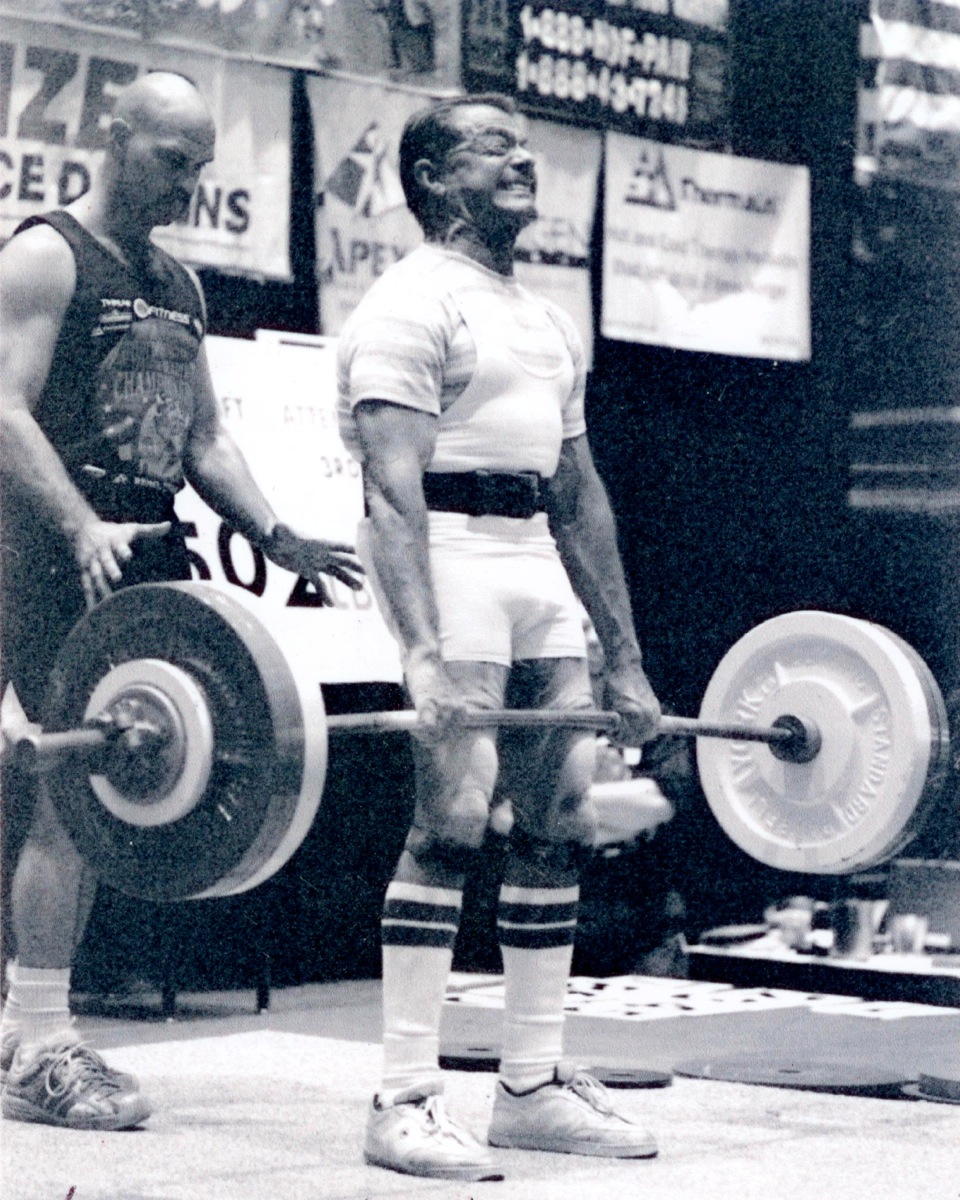
Rich Abbott pulling a heavy deadlift. I think he was in his 60's in this photo. This is what a lifetime of physical training can do for you.


Hail to the Dinosaurs!

I wrote Chalk and Sweat seven years
ago.

I wrote it to try to save an hour a day.

That's how much time I spend answering
emails from readers who ask about training
programs and workouts.

"Can you give me a good workout to build
maximum muscle mass?"

"I'm a beginner. Can you give me a good
training program?"

"I've been training for two years, and now
I want to get serious about it. What sort of
workout should I follow?"

"I only have dumbbells and an exercise
bench? Can you give me a good workout?"

"I want to use barbells, dumbbells and
sandbags, but I don't know how to work
them into a program without over-training.
Can you give me a good workout?"

"I need a good bulking up program. Can
you help me? What should I do?"

"I want to train on Olympic lifting. Can you
give me a program?"

"I need something to build all-around
strength, muscle mass and really good
condition. Can you give me a workout?"

"I can only train three days a week for
about 45 minutes. What should I do?"

"I need a two-day a week program. Do
you have one you like?"

"I need a good program for powerlifting.
Can you give me one?"

And so on.

Now, these are all good questions, and
I'd love to be able to answer them all -
but it takes time, and I'm awfully busy.

So I thought I'd put together a book that
gives you a bunch of different workouts,
with detailed. step by step instructions on
how to do them.

The result was Chalk and Sweat.

50 different workouts, using a variety of
different kinds of equipment. Training
programs for beginners, intermediates
and advanced Dinos. Special programs
for building maximum strength and
muscle mass with leg and back
specialization workouts.

I was looking at it the other day, and I
thought, "This is better than I
remembered!"

Many of you already have a copy of the
little monster. If you do, pick it up and
take a look -- you'll probably see
something you missed the first time
you read it.

If you don't have a copy, you're missing a
great little book with a ton of terrific
workouts and training tips. So go here
to grab a copy:

http://www.brookskubik.com/chalk_and_sweat.html

By the way, Workout No. 41 is a pretty
good one for advanced Dinos looking to
build some serious strength and mass.

Yours in strength,

Brooks Kubik

2.  My other books and courses are
right here at Dino Headquarters:

Hard-copy and PDF

http://www.brookskubik.com/products.html

Kindle

http://www.brookskubik.com/kindle.html

P.S. 2. Thought for the Day: "If something
is worth doing, it's worth learning how to
do it right." -- Brooks Kubik

If you enjoyed this Blog post, you'll love my Dinosaur Training books and courses. You can get them in PDF and hard-copy editions at my website or in Kindle editions at Amazon. 

For a complete list of my Kindle books, go here: http://www.brookskubik.com/kindle.html


"Would this Work?" He Asked

Hail to the Dinosaurs!

Things have been moving at warp speed
here at Dino Headquarters.

We got the copies of my new "How Strong
Are You?" course from the printer, and we've
been stuffing envelopes and shooting them
out into the mail ever since.

We still have some more to pack and ship
today, so today will be busy as well.

A number of Dinos have already grabbed
and read the e-book version of the course,
and we're getting great feedback from them.
It looks like another home run.

The little monster made it into the Amazon
Top 10 in its category -- proving that there is
more of an interest in old-school, real world
strength training than I ever imagined.

Anyhow, if you've been waiting to grab the
course, do it now -- and then come back
and keep on reading, because we're going
to cover some important information:

a. For hard-copy, go here:

http://www.brookskubik.com/dinosaur_secrets_02.html

b. For Kindle e-book, go here:

http://www.brookskubik.com/dinosaur_secrets2_kindle.html

On the training front, I'm getting a ton of
questions from Dinos about doing total body
workouts two or three times a week.

By total body, they mean five to ten different
exercises, including squats, deadlifts, and upper
body exercises in each workout.

"Would it work?" they ask.

And the answer is -- it depends.

Total body workouts are great for beginners.
It lets them do the same exercises often enough
to learn how to perform them properly and
efficiently. And beginners are not strong enough
to outrun their recovery ability with a total
body session. So for beginners, a total body
workout is an excellent idea.

For intermediates and advanced trainees, things
are different.

Intermediate and advanced trainees are strong
enough to handle weights that are so heavy that
it becomes very difficult to recover from a total
body workout.

You also have the problem of doing more sets
as you grow stronger -- because you need to
do more progressively heavier warm-up sets to
get to your working weight -- and that means
the workout grows longer and longer.

As I've often noted, I hit a pleateau in my 20's
where I could not gain an ounce of muscle or
add any weight to the bar no matter how hard
I tried.

At the time, I was doing a nine exercise total
body workout three times a week. I did 5 x 5
on almost all of the exercises. And I did squats
and deadlifts in every workout -- which really
over-trained my lower back.

I switched to abbreviated training and a divided
workout schedule, and made enormous progress,
both in strength and muscle mass.

I cover the details in Strength, Muscle and Power
and in Dinosaur Training Secrets, Vol. 1, Exercises,
Workouts and Training Programs. If you're thinking
about a total body workout, you ought to give them
a read. What you learn might save you years of
wasted training.

As always, thanks for reading and have a great
day. If you train today, make it a good one. In the
meantime, I'm going to get back to packing orders
for the new course!

Yours in strength,

Brooks Kubik

P.S. Go here to grab Strength, Muscle and Power:

http://www.brookskubik.com/strength_muscle_power.html

P.S. 2. For Dinosaur Training Secrets, Vol. 1, go here:

a.  Hard-copy

http://www.brookskubik.com/dinosaur_secrets_01.html

b. Kindle e-book

http://brookskubik.com/dinosaursecrets01_kindle.html

P.S. 3. My other books and courses are right
here at Dino Headquarters:

http://www.brookskubik.com/products.html

P.S. 4. Thought for the Day: "What works best in your
training will change over time. That often takes a long
time to understand." -- Brooks Kubik

**********************************************

Don't Jump Into the Middle of the Ocean!

Hail to the Dinosaurs!

Three quick notes, and then we'll talk training
for today -- and we have something very
important to cover.

1. Knife, Fork, Muscle

Is in stock and ready to ship -- and readers are
loving the little monster and telling us it's the
best book on diet and nutrition for strength
training and muscle building that they ever
read. Grab your copy here:

http://brookskubik.com/dinosaur_nutrition.html

2. The new quarterly Dinosaur Files
Is also in stock and ready to ship -- and readers
love it. Go here to grab a copy:

http://www.brookskubik.com/dinosaurfiles_quarterly.html

If you want to order multiple products to
save on s&h, shoot me an email and ask
for a shipping quote. We can usually save
you some serious clams.

3. I'll be on Carl Lanore's SuperHuman
Radio on Tues at 12:00 -- to talk about
Knife, Fork, Muscle. Be sure to catch the
live broadcast -- or listen to the podcast
later at your convenience. I always have
great fun on Carl's show, and they're
always full of great info.

On the training front, let's talk about one
of the strange and bizarre aspects of strength
training and muscle building.

I call it the Middle of the Ocean Syndrome.

Here 's what it is.

If you wanted to learn to swim, you probably
wouldn't start by jumping into the middle of
the ocean to see how you did.

Nor would you try swimming five or six miles of
laps in an Olympic-size training pool.

Or doing four hours a day of swimming practice
on your very first day of swimming.

Or printing out the training program of the top
swimmer at the Olympic Games and trying to
match it lap for lap in the pool.

If you had never swum before, or if you had
never trained as a competitive swimmer, it
would be foolish -- and impossible -- to try
to follow the program of a Gold Medal winner
who had been swimming competitively for
the past 10 or 15 years.

I don't think anyone would be foolish enough
to even try.

And the same is true of most other sports.
Not too many men who have never played
basketball think they can play in the NBA --
or that they could practice with a pro
basketball team.

The same is true of professional football,
boxing, and just about any other sport.

But somehow, strength training is different.

Somehow, everyone, even a beginner, thinks
that he can jump into the middle of the ocean
on his very first day of training.

And many coaches, trainers, gym owners and
folks who write about training seem to think
the middle of the ocean is the best place to
start your strength training.

Or that it's a good idea to follow the exact
program used by this year's Mr. Everything
winner -- or this year's top powerlifting
champion, or top weightlifter or strongman.

And it doesn't have to be a beginner who
falls into the Middle of the Ocean Syndrome.
There are plenty of intermediate trainees who
read about So and So's Bomb, Blast and Blitz
Arm Training Program -- and jump into an
ultra-intense, super-advanced workout that
does nothing but leave them sore, stiff, tired,
and exhaused.

Or So and So's Super Leg Training Workout --
and they can't walk normally for days.

Or an advanced weightlifting program that
grinds them up and spits them out into the
old burn-out pile in just a couple of weeks --
or a couple of workouts.

It seems that trainees have an almost infinite
capacity to over-estimate the amount of
exercise they can handle -- or the intensity
that is appropriate to their current level of
development.

And they go from program to program, first
burning out on this, and then burning out on
that -- and never going anywhere in terms of
building strength and muscle.

So here's the solution -- and it's very simple.

If you're a beginner, or if you're getting started
again after a long lay-off, start light and easy
and make very gradual, slow, steady progress.
Don't try to rush things.

If you want to specialize, or try a new exercise
or a new workout, start slow and easy and build
up gradually and progressively. You don't have to
kill yourself in the very first workout.

The whole idea of progression is to start light and
easy and gradually work up to hard and heavy.

If you start hard and heavy there's no progression.
How could there be?

In short  . . .

Leave the middle of the ocean thing for the other
guys.

It may be hard at first, but it's one of the keys to
making real progress.

As always, thanks for reading and have a great
day. If you train today, make it a good one!

Yours in strength,

Brooks Kubik

P.S. Older trainees need to be particularly careful
to train with the correct volume, intensity and
workload. I cover these topics in detail in Gray
Hair and Black Iron:

http://www.brookskubik.com/grayhair_blackiron.html

P.S. 2. My other books and courses are right
here at Dino Headquarters -- along with the
Dinosaur Files, Dinosaur DVD's, and other Dino
goodies:

http://www.brookskubik.com/products.html

P.S. 3. Thought for the Day: "The best training
programs are simple, focused and progressive.
The over-the-top stuff sounds great but doesn't
do anything for you." -- Brooks Kubik

******************************************

The Chalk and Sweat Phenomenon!

Hail to the Dinosaurs!

Something very interesting has happened over
the past couple of weeks. It ties into the
end of the old year and to the fact that in
December 2010 I launched a new book called
CHALK AND SWEAT, which gives readers a series
of 50 different workouts: 10 workouts for
beginners, 10 for intermediates, 10 for
advanced trainees, 10 leg specialization
programs and 10 back specialization programs.

I wrote the book for a very simple reason.

I get tons of emails with training questions,
and many of them are from:

1. Beginners who need a good workout and have
no idea how to put a program together -- and
who always do WAY TOO MUCH -- meaning too many
exercises,too many sets, and too many training
days per week.

2. Intermediates who try to do a more
advanced program than their bodies can handle.

3. Advanced men who get off track somehow (usually
as the result of too many muscle comics or too
much time reading about training on the internet)
and who are stuck in the dreaded STICKING POINT
zone.

4. Guys who want to build as much muscle and bulk
as fast as possible -- but don't know how to do it.
(Hint: leg and back specialization!)

I don't have time to give personal answers to
everyone who needs a good training program --
so I wrote a book that lays it all out and
gives enough variety that there's literally
"something for everyone."

So here's what happened, based on emails that have
come in the door over the past few weeks.

A number of readers grabbed a copy of CHALK AND
SWEAT back in December 2010 -- and started off
on one of the programs in the book at the beginning
of 2011 -- and trained on different programs from
the book over the course of the year -- and did
ALL of their training for the entire year using
programs from the book -- and then, at the end
of the year, they shoot me an email and say, "I
can't believe the gains I made over the past
year!"

Well, I can believe it.

As I said In Dinosaur Training: "Strength training
works!" You just have to do it RIGHT! And part of
"doing it right" is using the right kind of training
program -- a training program that is based on real
world, real life STUFF THAT WORKS rather than on
something some guy writes for a muscle comic because
he needs to make his deadline for the upcoming issue
and he needs to make it "new and different" because
that's what sells magazines.

And -- very important -- you need to follow a
program suited to your current level of
development.

The bottom line is this -- the idea of writing a
book that gives a series of progressively more
difficult training programs for Dinos was a GREAT
idea -- and there are a bunch of Dinos walking
around who are bigger and stronger today than
ever before -- and its the result of the
programs in the book -- including those
leg and back programs that seem to have worked
pretty darn well for everyone who tried them.

So, to everyone who ordered CHALK AND SWEAT and
gave the programs a try and got great results --
THANK YOU! And DOUBLE THANK YOU to everyone
who wrote in to report their results!

As always, thanks for reading and have a great
day. If you train today, make it a good one!

Yours in strength,

Brooks Kubik

P.S. You can experience the CHALK AND SWEAT phenomenon
for yourself by grabbing a copy of the little monster
from the Dinosaur Training bookstore:

http://www.brookskubik.com/chalk_and_sweat.html

P.S. 2. My other books, courses and DVD's are
available at the usual place:

http://www.brookskubik.com/products.html

P.S. 3. Thought for the Day: "Most people don't plan
to fail; they fail to plan." -- John L. Beckley

From Mouse to Moose to Megasaurus!

Hail to the Dinosaurs!

I get tons of questions from readers
who ask me to outline a training program
for them. I'd love to be able to answer all
of these emails, but I can't. There are way
too many of them, and I'd spend all day doing
nothing but writing programs.

So I came up with a way to solve the problem.

I wrote a book that gives you 50 different
training programs.

The title of the book is CHALK AND SWEAT. I
chose the title because the workouts in the
book are Dino style workouts. When you're
finished with one of them, you're going to
be covered in chalk and sweat.

I began with 10 progressively more difficult
programs for beginners. So if you're a beginner,
you start with one of the easier programs, and
follow it for 6 to 8 weeks. Then you move on to
one of the next programs in the the beginner's
section. Follow that for 6 to 8 weeks. And then
move on to one of the other programs for beginners,
and hit that one for 6 to 8 weeks.

At that point, you'll be showing some really good
progress -- and you'll be ready for more difficult
programs.

So I included 10 different programs for
intermediates.

After you train on a few of the intermediate
programs (for 6 to 8 weeks per program), you'll
be ready for some even more demanding programs --
so I included 10 programs for advanced trainees.

It's a simple, sure-fire way to take you from
beginner -- to intermediate -- to advanced.

But what do you do after you've worked up to
the advanced programs and trained on a few of
them for 6 to 8 weeks per program?

How about going on a specialization program to
build maximum muscle mass and maximum strength
and power?

You guessed it -- I included 20 different programs
to help you build maximum muscle mass, maximum
strength, and maximum power.

You do it with leg specialization programs and
with back specialization programs. I included 10
of each -- and I teach you how to use them for
maximum results as quickly and efficiently as
possible.

So if you want to go from mouse to moose
to megasaurus, CHALK AND SWEAT will teach
you how to do it.

I tried to make the book work for everyone. It
includes programs you can follow at any decently
equipped commercial gym or school weight room --
or in your home gym. It includes programs for
those who enjoy Olympic lifting -- for those
who enjoy powerlifting -- for those who enjoy
strongman training -- for those who enjoy
bodyweight workouts -- and for those who like
to mix things up.

So nowadays, when someone asks me to give them
a workout, I tell them I already gave them 50
workouts. They're right there in CHALK AND
SWEAT -- and if you're looking for some serious
gains, this is the answer.

Yours in strength,

Brooks Kubik

P.S. Go here to grab your copy of CHALK AND
SWEAT -- and get ready for some great workouts
and some great gains:

http://www.brookskubik.com/chalk_and_sweat.html

P.S. Save some clams on s&h by ordering two or more
Dinosaur Training products at the same time:

http://www.brookskubik.com/products.html

Beginner, Intermediate or Advanced Lifter -- Which Are You?

Hail to the Dinosaurs!

If you missed yesterday’s email message, Happy New Year!

It’s 2011 – another year made to order for great workouts, great lifting and great results.

In that regard, I’ve been receiving tons of training questions from readers. Here’s one of the most common questions over the past couple of weeks.

“Your new book, Chalk and Sweat, has training programs for beginners, intermediates and advanced lifters. How do I know which category I fall into?”

BEGINNERS

If you’ve never trained before, or you used to train but you haven’t done so for a long time, you’re a beginner.

If you’ve been working out, but not using basic, compound exercises like squats, deadlifts and presses, then you’re a beginner as far as the workouts in Chalk and Sweat are concerned.

Chalk and Sweat has ten different training programs for beginners. They feature different exercises and different types of equipment, and some are more difficult than others. A true beginner – no training at all – should start on one of the easier programs and follow it for 4 to 6 weeks in order to get started. Then he can try one of the other programs for 4 to 6 weeks.

If a beginner worked his way through 4 or 5 of the beginner programs, training progressively and adding weight to the bar on a regular basis, he’d be ready for one of the ten intermediate schedules in the book.

If you’re not sure where to start, and you’re not very experienced in training, then follow one of the beginner programs. It’s much better to start out light and easy and progress from there than to jump into a program that is too advanced and too strenuous and do the crash and burn thing.

As I’ve said many times, strength training is a life-long pursuit. You’re in it for the long haul. It doesn’t matter where you start – what matters is where you finish. And the best way to finish strong is to begin at the right place – with a program that is fun, interesting and progressive – NOT a program that knocks you flat on your you know what. THAT kind of program is for later on, when you’re more experienced.

INTERMEDIATES

An intermediate is someone who can move respectable weight in PERFECT FORM for SETS AND REPS in the basic compound exercises.

Something like this – in strict form, performed as part of your regular workouts:

1. Squat 2-3 sets of 5 to 8 reps with bodyweight

2. Deadlift 2 -3 sets of 5 to 8 reps with 20 pounds over bodyweight

3. Standing (Military) press 2 -3 sets of 5 reps with 60 percent of bodyweight

4. Bench press 2 -3 sets of 5 to 8 reps with 80 percent of bodyweight

5. Barbell bent-over row 2 – 3 sets of 5 to 8 reps with 70 percent of bodyweight

In addition, an intermediate is someone who has been training regularly and progressively for a period of at least three months, and who can handle three hard weekly workouts of 45 to 75 minutes without undue fatigue. In other words, an intermediate is in good lifting condition.

The above numbers are not exact because there are many individual factors that come into play here. These are ballpark numbers. General guidelines. Rules of thumb.

ADVANCED LIFTERS

An advanced lifter can do the following in strict style as part of his regular workouts:

1. Squat 2 - 3 sets of 5 to 8 reps with bodyweight plus 50 to 75 pounds

2. Deadlift 2 – 3 sets of 5 to 8 reps with bodyweight plus 100 pounds

3. Standing (Military) press 2 – 3 sets of 5 reps with 80 percent of bodyweight

4. Bench press 2 – 3 sets of 5 to 8 reps with bodyweight plus 20 pounds

5. Barbell bent-over row 2 – 3 sets of 5 to 8 reps with 90 percent of bodyweight

In addition, an advanced lifter will have at least one year of regular, progressive training under his belt, and will be in excellent condition for lifting. This is a MINIMUM, and for many of you, it’s going to be more like two or three years before you reach advanced status.

And once again, the above numbers are ballpark – so treat them as general guidelines.

Note that you may find it easy to reach intermediate or advanced status in some exercises, and more difficult in others. This is the result of past training and individual differences. Some people are naturally stronger in certain exercises.

That should help decide where you are now – beginner, intermediate or advanced – and it should help give you some training goals for the coming year. I want all beginners to move up to intermediate status in 2011 – and all intermediates to move up to advanced status.

Thanks for reading, and have a great day – and if you train today, make it a good one! Remember, you achieve success from one good workout after another.

Yours in strength,

Brooks Kubik


P.S. Dinosaur Training books and courses – and the Dinosaur Files monthly newsletter -- will take you to the top of the iron mountain in 2011:

1. Chalk and Sweat: Dinosaur Training Workouts for Beginners, Intermediates and Advanced Lifters – the brand new book from Dino Headquarters, and already a huge hit with Dinos around the world:

http://www.brookskubik.com/chalk_and_sweat.html

2. The Dinosaur Files newsletter – 20 pages, hard copy, mailed to you monthly, with great photos and full of terrific training articles. Sub now, and ask me to start your subscription as of May 2010 so that you don’t miss an issue of this great newsletter:

http://brookskubik.com/dinosaur_files.html

3. Dinosaur Training: Lost Secrets of Strength and Development – the book that started the Dinosaur Revolution – the book they call “the bible of strength training”:

http://www.brookskubik.com/dinosaur_training.html


4. Strength, Muscle and Power – a great new book from Dinosaur Headquarters – it’s an encyclopedia of strength training and muscle building secrets – with dozens of hard-hitting, no nonsense training programs for cellar-dwellers and garage gorillas of all ages:

http://brookskubik.com/strength_muscle_power.html


5. Gray Hair and Black Iron: Secrets of Successful Strength Training for Older Lifters – the first book ever written about serious strength training for older lifters – featuring more than 50 workouts specially designed for older lifters:

http://www.brookskubik.com/grayhair_blackiron.html

6. History’s Strongest Men and How They trained – Vol 1: Doug Hepburn. A big 32 page training course covering the life and lifting – and the training programs – of the Canadian Hercules, Doug Hepburn:

http://www.brookskubik.com/doug_hepburn.html