Showing posts with label training for sports. Show all posts

The Save Your Life Neck Training Workout - And More!

 
The Save Your Life Neck Workout is a must-read for anyone interested in wrestling, bjj, grappling or any other combat sport - and it's pretty darn important for everyone else, as well. By the way, that's World Champion Lou Thesz applying the toe hold in the above photo - and he did a heck of a lot of neck training over the years.


Hail to the Dinosaurs!

Are you reading the new Dinosaur
Files
monthly newsletter?

I hope so, because every issue is a
goldmine of information.

It's 8 to 12 pages per issue - a fast,
fun read - available in PDF format
with immediate electronic delivery -
and it's printable, so you can print
each issue and save it in your
strength training and muscle
building collection.

And if you don't have a printer, just
talk to your local Kinko's or other
printing center. You can email The
Dino Files to them, and they can
print it for you for a nominal charge -
and it will be ready by the time you
walk into the shop.

We started this format with the Oct,
2017 issue - and it seems to work
pretty well. It saves a ton on postage,
especially for our overseas Dinos.

We've had great feedback on each
issue - and that's not surprising,
because each issue is loaded with
valuable training tips and workouts.

For example . . .

The October 2017 issue includes:

1. a stonelifting workout that you
can do on its own or once a week
in combination with barbell and
dumbbell workouts; and

2. a 3-day per week workout used
with great success by a 58-year
old Dinosaur

The November 2017 issue covers:

1. one-hand barbell lifts,

2. Bone Strength Training,

3. outdoor training,

4. a six-exercise, total-body HIT
workout,

5. a sled-pulling and tire flipping
workout; and

6. The Save Your Life Neck
Training Workout

By the way, people often ask me about
strength training for wrestling, bjj and
martial arts - and The Save Your Life
Neck Training Workout is a pretty
good place to start.

The December 2017 issue features
a very effective six-day per week
workout that you can modify to
do your choice of:

1 exercise per workout

2 exercises per workout

or

3 exercises per workout

This has been one of our most
popular workouts - and one of
our most popular issues.

The January 2018 issue covers:

1. Bone density and celiac disease,

2. Cold weather workouts,

3. Lower back rehab,

4. Handstand pushup progressions,

5. A kettlebell workout, and

6. A special mass-building program
for Dinos (which is a little bit different
than most of my suggested workouts -
but very effective and lots of fun)

The February 2018 issue includes:

1. Training for older Dinos,

2. A three-day per week program,

3. A flexible daily training program
with complete training schedules for
both indoor and outdoor training -
giving you more than a dozen
workouts to try.

As you can see, we pack tons of great
info into each issue - and all of it is
practical and effective. In the words
of my good friend, Mike Thompson,
it's "the real thing."

You can grab the Oct, Nov, Dec and
Jan issues right here:

http://brookskubik.com/dinosaur_files.html

And you can grab the February 2018
issue right here:

http://www.brookskubik.com/dinosaur-files-february2018pdf.html

I'll send links to other issues of The
Dinosaur Files in a separate email -
because this one is plenty long
already!

Yours in strength,

Brooks Kubik

P.S. If you want a subscription to The
Dinosaur Files, we can make it happen.
I can even do hard-copy subscriptions for
those of you here in the USA. Just shoot
me an email and ask for the details.


Ten Things I Wish I Had Done 45 Years Ago!

I never did front squats when I was in high school - and now I wish I had done them. Here are 10 more things I wish I had done back then.


Hail to the Dinosaurs!

Two quick notes, and then we'll talk
training.

1. The April Dino Files

Do you have the April issue of The
Dinosaur Files?

If not, go here to grab it:

http://www.brookskubik.com/dinosaurfiles-april2018.html

Likewise, if you missed the March
issue, you can find it here:

http://www.brookskubik.com/dinosaur-files-march2018pdf.html

I'm working on the May issue, and
it's looking good - I'll send an email
when it's ready to go.

2. The Retro Strength Shop

John Wood continues to add tons of
great stuff to the Retro Strength
Shop - including some killer Dinosaur
tee shirts, hoodies, coffee mugs and
posters.

Check them out:

https://www.retrostrength.com/shop/

3. Ten Things I Wish I Had Done 45
Years Ago


After awhile, you look back on life and
think about things you've done - and
things you wish you had done.

Here are 10 things I wish I had done
when I was a high school wrestler 45
years ago.

Sure, I trained - a lot - and I did pretty
well - but I would have done a lot better
if I had focused on some of these things.

1. More Dumbbell Training!

I wish I had done more dumbbell training
back then.

Dumbbells rock - especially if you do
old-school dumbbell exercises - the kind
I teach in Dinosaur Dumbbell Training.

2. Cleans and snatches.

I wish I had done more cleans and
snatches.

I'm talking barbell power cleans and
barbell power snatches.

And the power clean and press - or
push press.

These are great for wrestlers - or for
anyone else.

3. Trap Bar Deadlifts.

These may be the very best lower body
exercise for wrestlers.

They mimic the lifting and pulling in a
wrestling match very well.

4. Serious Grip Work.

The kind I cover in Dinosaur Training
and Strength, Muscle and Power.

And for the record - I wish I had started
grip work at age 5 or so.

Or even earlier.

5. Push-ups and Pull-ups.

All kinds of different push-ups and
pull-ups - including those killer double
rope pull-ups in Dinosaur Bodyweight
Training.

6. Never Seen a Muscle Magazine.

Seriously - I wish I had never seen
a muscle magazine when I was a kid.

They hurt more than they helped.

Too much focus on bodybuilding and
bodybuilding workouts.

Very little on strength training for
athletes.

7. Thick Bar Work.

It's perfect for wrestlers.

Great for everyone else - but perfect
for wrestlers.

8. More Sprints.

We ran laps - or went out and jogged a
couple of miles - but sprints would have
been better.

Or, at least, they would have been a very
good addition to the program.

Hill sprints also would have been very
good - except we didn't have any hills
by my high school.

9. Jump Rope.

Jumping rope - the way boxers do it,
using a high quality leather rope - is
a very good, much neglected, totally
under-rated exercise.

Boxers do it all the time, and that should
tell you something.

10. Taken a Chance.

There was a cute little girl in the front row
of my English class.

I should have taken a chance and asked
her out.

Because, after all, that's what really
matters in life.

Taking a chance - and seeing what
happens.

Applies to lifting - and to any kind of
training - and to life in general.

The Wrap-Up

So there you have it.

Ten things I wish I had done differently
back in high school.

But guess what - I ended up doing 9 out
of 10 of them - and even if I never asked
out the girl in English class, I did ask Trudi
out - and that worked out pretty well.

Anyhow, as always, thanks for reading
and have a great day.

If you train today, make it a good one!

Yours in strength,

Brooks Kubik

P.S. I mentioned a couple of great books
in today's post. You can find them right
here:


Dinosaur Training: Lost Secrets of
Strength and Power

The little blue book they call "The Bible
of Strength Training."

Tons of great training ideas - thick bars,
sandbags, heavy awkward objects, death
sets, single rep training, abbreviated work-
outs, power rack training, and some very
important chapters on the all-important
mental aspects of strength training.

Includes some of my favorite workouts.

A best-seller since 1996.

http://www.brookskubik.com/dinosaur_training.html


Dinosaur Dumbbell Training

Tons of old-school dumbbell exercises -
and over 50 complete workouts.

http://www.brookskubik.com/dinosaur_dumbbelltraining.html


Dinosaur Bodyweight Training

A complete course in old-school body-
weight training - with plenty of killer
exercises - and more than 50 workouts.

http://www.brookskubik.com/dinosaur_bodyweight.html


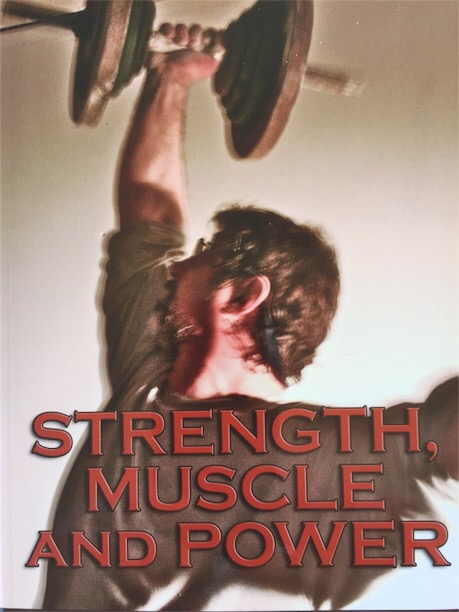
Strength, Muscle and Power

Power rack training, isometronics, rest
pause training, mind power, finishers,
grip work, sandbags, barrels, one-hand
deadlifts, tendon and ligament strength,
home gym training, specialization, some
of my favorite abbreviated and ultra-
abbreviated workouts - and much more!

Includes so many workouts I can't count
them all.

http://www.brookskubik.com/strength_muscle_power.html

P.S. 2. Thought for the Day

"Study the past to build the best
possible future."

- Brooks Kubik

BEFORE YOU LEAVE . . .

We have more than 25 Dinosaur Training books and courses in the Kindle bookstore - here are several of them - head on over and take a look at the others:


How to Build Gold Medal Strength and Power

Hail to the Dinosaurs!

Yesterday, I shared an email about
Olympic gold-medal winner Henry
Wittenberg.

Now I want to tell you a bit about
his training.

Henry Wittenberg was one of the first
amateur wrestlers in the United States
to do heavy weight training.

His coach didn't believe in weight training
or weightlifting. He thought it made you
slow and muscle-bound -- which is what
most coaches thought back in the thirties
and forties. Heck, many coaches still
worried about the muscle-bound myth
when I was in high school back in the
70's!

Henry Wittenberg reasoned that building
great strength would make him a better
wrestler -- and that he'd maintain his
speed and his timing if he kept on doing
his regular wrestling workouts.

It was good thinking. In fact, it was 100
percent correct.

But because his coach didn't believe in
weight training, he had to train in secret.

And because he spent so much time on the
mat, he had to keep his barbell and dumbbell
workouts short and sweet, with no wasted
effort and no wasted time.

So he trained on the basics -- the military
press with barbells, squats, barbell bent-
over rowing, dumbbell curls and dumbbell
presses.

And it worked pretty well. He got REALLY
strong.

He worked up to doing TEN consecutive
reps in the military press with 200 pounds --
and that was his bodyweight -- so it was
pretty darn good.

He could military press 250 pounds for
a single.

That's some serious pressing power.

Whittenberg was strong in other exercises,
as well.

He squatted with 400 pounds, and did 10
reps in the bent-over row with 180 pounds.
And he handled 60 pound dumbbells in his
curls.

Not bad for a man who was training for a
different sport -- and who had to do his
lifting in secret so his coach wouldn't find
out about it!

At the 1948 Olympic Games he trained with
the United States Olympic weightlifting team.
He was so strong that the lifters tried to get
him to change sports!

For extra conditioning, he did roadwork.

Good old-fashioned running.

That, and his wrestling workouts, were all he
did -- and all he needed to do.

Eventually, he made a confession to his
wrestling coach. Admitted that he'd been
lifting weights in secret. At that point, he
was the Olympic champion -- so the
coach let him keep on lifting!

You can do a lot of fancy, modern stuff if
you're a wrestler -- but you also can train
like Henry Wittenberg. You can keep it
hard, heavy and simple.

And if you do, you'll do pretty darn well.

Yours in strength,

Brooks Kubik

P.S. If you want to build the kind of serious,
old-school pressing power and total body
strength that won Henry Wittenberg an
Olympic gold medal in wrestling, then
grab this little monster today:

Kindle e-book

http://www.brookskubik.com/militarypress_kindle.html

Hard-copy

http://www.brookskubik.com/militarypress_course.html

PDF with electronic delivery
See the section for the PDF courses at
our products page - and scroll down to
find the Military Press course.

http://www.brookskubik.com/products.html

P.S. 2. My other books and courses -- and
links to my other Kindle e-books and PDF
training courses -- are right here:

http://www.brookskubik.com/products.html

P.S. 3. Thought for the Day: "The answer to
most questions in life is good old fashioned
hard work." - Brooks Kubik

***********************************************************************************

How to Build Gold Medal Strength and Power!

Hail to the Dinosaurs!

Two weeks ago I shared an email about
Olympic gold-medal winner Henry
Wittenberg.

Now I want to tell you a bit about
his training.

Henry Wittenberg was one of the first
amateur wrestlers in the United States
to do heavy weight training.

His coach didn't believe in weight training
or weightlifting. He thought it made you
slow and muscle-bound -- which is what
most coaches thought back in the thirties
and forties. Heck, many coaches still
worried about the muscle-bound myth
when I was in high school!

Henry Wittenberg reasoned that building
great strength would make him a better
wrestler -- and that he'd maintain his
speed and his timing if he kept on doing
his regular wrestling workouts.

It was good thinking. In fact, it was 100
percent correct.

But because his coach didn't believe in
weight training, he had to train in secret.

And because he spent so much time on the
mat, he had to keep his barbell and dumbbell
workouts short and sweet, with no wasted
effort and no wasted time.

So he trained on the basics -- the military
press with barbells, squats, barbell bent-
over rowing, dumbbell curls and dumbbell
presses.

And it worked pretty well. He got REALLY
strong.

He worked up to doing TEN consecutive
reps in the military press with 200 pounds --
and that was his bodyweight -- so it was
pretty darn good.

He could military press 250 pounds for
a single.

That's some serious pressing power.

Whittenberg was strong in other exercises,
as well.

He squatted with 400 pounds, and did 10
reps in the bent-over row with 180 pounds.
And he handled 60 pound dumbbells in his
curls.

Not bad for a man who was training for a
different sport -- and who had to do his
lifting in secret so his coach wouldn't find
out about it!

At the 1948 Olympic Games he trained with
the United States Olympic weightlifting team.
He was so strong that the lifters tried to get
him to change sports!

For extra conditioning, he did roadwork.

Good old-fashioned running.

That, and his wrestling workouts, were all he
did -- and all he needed to do.

Eventually, he made a confession to his
wrestling coach. Admitted that he'd been
lifting weights in secret. At that point, he
was the Olympic champion -- so the
coach let him keep on lifting!

You can do a lot of fancy, modern stuff if
you're a wrestler -- but you also can train
like Henry Wittenberg. You can keep it
hard, heavy and simple.

And if you do, you'll do pretty darn well.

Yours in strength,

Brooks Kubik

P.S. If you want to build the kind of serious,
old-school pressing power and total body
strength that won Henry Wittenberg an
Olympic gold medal in wrestling, then
grab this little monster today:

Kindle e-book

http://www.brookskubik.com/militarypress_kindle.html

Hard-copy

http://www.brookskubik.com/militarypress_course.html

PDF edition

See the links to our PDF products at our
products page:

http://www.brookskubik.com/products.html

P.S. 2. My other books and courses -- and
links to my other Kindle e-books -- are
right here:

http://www.brookskubik.com/products.html

P,S. 3. Thought for the Day: "Train hard,
keep it real, and never give up." -- Brooks
Kubik

***********************************************************************************

Top Tips on Effective Warm-ups for Dinosaurs!


Bob Hoffman performing a hip lift with the World's Biggest Dumbbell, owned by legendary strongman Warren Lincoln Travis, who stands watching with interest. I hope Hoffman warmed up before trying this lift!


Hail to the Dinosaurs!

Last week we talked about stretching, and
whether it was good or bad for you.

I noted that when I was in high school,
stretching was the big deal in athletics.
The coaches had us to all sorts of stretches
before and after every practice and every
competition. It was supposed to prevent
injuries.

That theory has pretty much fallen by the
wayside over the years.

We've learned several important things,
and they've made coaches change what
they do.

Here's what we now know:

1. Too much stretching lowers a muscle's
strength and power potential -- so it's
NOT a good idea to do tons of stretching
before a heavy workout (or a football game
or a wrestling match or anything else
where strength and power is important).

2. Stretching can injure a "cold" muscle
or its attachments.

3. You get a better and fuller stretch when
the muscles and joints are warmed up and
looser.

For all of these reasons, most coaches
now have their athletes do stretching at
the end of a workout or a practice rather
than before.

Of course, some of us do need some
stretching before we train, usually for
a particular joint that needs extra work
to warm up and get loose. For example,
I always stretch my ankles before a
workout.

But most of my warming up follows
these general guidelines:

1. The best way to prepare for a workout
(or a practice or a competition) is to do a
warm-up that involves light movements
rather than the static stretches we did
"back in the day".

a. For example, you might prepare for a
squatting or deadlifting workout by doing
deep knee bends with no added weight.

b. Or you might do squats, front squats
or overhead squats with a length of PVC
pipe or broomstick.

c. Or you might use light Indian clubs to
loosen up your shoulders and upper back
before hitting the iron.

2. Do enough warming-up so that the joints
and the muscles are ready for the heavier
stuff, but don't do so many reps that you
start to have a pump. It's a warm-up, not
a workout. Five to ten deep knee bends (or
several sets of five to ten) may be all it
takes.

a. I usually do sets of three to five reps in
the overhead squat with a broomstick as
part of my warm-up. That's light and easy,
of course, but it does the trick.

3. Start light and perform the specific
exercise or lift you are planning to work --
and use a series of progressively heavier
warm-up sets performed in perfect form
to prepare you for the heavy stuff.

a. Remember that many or most top
weightlifters will start with the empty
bar for their first warm-up set -- even
if they work up to world-class weights
for their final sets.

4. Older trainees need more warming up
than younger trainees.

a. The older you get, the more time you
need to devote to your warm-ups.

b. At age 58, I now spend about 20
minutes on warm-ups before I even
touch the barbell -- and then I begin
with warm-up sets with the empty bar.

5. If you have time to train, you have time
to do a proper warm-up.

6. During the warm-up, concentrate deeply
on what you are doing. Don't just "run
through" the warm-up movements and the
warm-up sets. FOCUS on them.

a. Use the warm-up to help shift from the
everyday world we live in to the inner
universe we lift in.

7. Concentration and focus means no talking,
no goofing around, no distractions and (gasp!)
no social media.

And that's my take on warming-up. It's not
complicated, but it's not like the stuff the
coaches had us do 40 years ago.

As always, thanks for reading and have a
great day. If you train today, make it a
good one!

Yours in strength,

Brooks Kubik

P.S. We had a three way tie for our most
popular books last week:

Dinosaur Bodyweight Training

http://www.brookskubik.com/dinosaur_bodyweight.html

Dinosaur Dumbbell Training

http://www.brookskubik.com/dinosaur_dumbbelltraining.html

Knife, Fork, Muscle

http://www.brookskubik.com/dinosaur_nutrition.html

P.S. 2. My other books and courses are
right here at Dinosaur Headquarters:

http://www.brookskubik.com/products.html

P.S. 3. Thought for the Day: "Train smart,
and as you grow older, train smarter."
-- Brooks Kubik

***********************************************************************************

How to Build Gold Medal Strength and Power!

Hail to the Dinosaurs!

Earlier today I shared an email about
Olympic gold-medal winner Henry
Wittenberg.

Now I want to tell you a bit about
his training.

Henry Wittenberg was one of the first
amateur wrestlers in the United States
to do heavy weight training.

His coach didn't believe in weight training
or weightlifting. He thought it made you
slow and muscle-bound -- which is what
most coaches thought back in the thirties
and forties. Heck, many coaches still
worried about the muscle-bound myth
when I was in high school!

Henry Wittenberg reasoned that building
great strength would make him a better
wrestler -- and that he'd maintain his
speed and his timing if he kept on doing
his regular wrestling workouts.

It was good thinking. In fact, it was 100
percent correct.

But because his coach didn't believe in
weight training, he had to train in secret.

And because he spent so much time on the
mat, he had to keep his barbell and dumbbell
workouts short and sweet, with no wasted
effort and no wasted time.

So he trained on the basics -- the military
press with barbells, squats, barbell bent-
over rowing, dumbbell curls and dumbbell
presses.

And it worked pretty well. He got REALLY
strong.

He worked up to doing TEN consecutive
reps in the military press with 200 pounds --
and that was his bodyweight -- so it was
pretty darn good.

He could military press 250 pounds for
a single.

That's some serious pressing power.

Whittenberg was strong in other exercises,
as well.

He squatted with 400 pounds, and did 10
reps in the bent-over row with 180 pounds.

And he handled 60 pound dumbbells in his
curls.

Not bad for a man who was training for a
different sport -- and who had to do his
lifting in secret so his coach wouldn't find
out about it!

At the 1948 Olympic Games he trained with
the United States Olympic weightlifting team.
He was so strong that the lifters tried to get
him to change sports!

For extra conditioning, he did roadwork.
Good old-fashioned running.

That, and his wrestling workouts, were all he
did -- and all he needed to do.

Eventually, he made a confession to his
wrestling coach. Admitted that he'd been
lifting weights in secret. At that point, he
was the Olympic champion -- so the
coach let him keep on lifting!

You can do a lot of fancy, modern stuff if
you're a wrestler -- but you also can train
like Henry Wittenberg. You can keep it
hard, heavy and simple.

And if you do, you'll do pretty darn well.

Yours in strength,

Brooks Kubik

P.S. If you want to build the kind of serious,
old-school pressing power and total body
strength that won Henry Wittenberg an
Olympic gold medal in wrestling, then
grab this little monster today:

Kindle e-book

http://www.brookskubik.com/militarypress_kindle.html

Hard-copy

http://www.brookskubik.com/militarypress_course.html

P.S. 2. My other books and courses -- and
links to my other Kindle e-books -- are
right here:

http://www.brookskubik.com/products.html

*********************************************

How to Train for Speed and Power!

Hail to the Dinosaurs!

One quick note, and then we'll talk training
for speed and power.

I'll be co-hosting Physical Culture Radio
at 12:00 EST today. Catch the show live
or listen to the download at your
convenience.

Physical Culture Radio is part of the
SuperHuman Radio network. You can
find Physical Culture Radio right here:

http://superhumanradio.com/

Today's show will cover "Lessons from
Paradise" -- and I think you'll find it to
be very interesting and thought-provoking.
So check it out, and tell me what you
think.

On the training front, we've been talking
about training for speed and power for
the past couple of days.

Yesterday I gave you eight tips for building
speed and power -- and promised to give
you another one today.

It's the most important one. And pay
attention, because this could help rocket
you to some big gains.

Here it is:

Practice moving heavy weights in perfect
form as fast as you can -- with ever
increasing speed from start to finish.

For example . . .

In the military press, you clean the bar
to your shoulders, pause, get set -- and
then drive the bar up as hard and as fast
as possible -- in perfect form.

Put all your strength and power behind
the press.

Give it 100% focus and total concentration.
Focus and concentration help link the mind
and the muscles -- and activate the nerve
impulses that tell the muscle fibers to
contract hard and fast.

Maintain that focus from start to finish.

When you hit the sticking point, drive
harder than ever before. Try to blast
right through it.

You may not move super fast at the sticking
point, but by trying to do so, you'll activate
an enormous number of muscle fibers.

You'll also strengthen the mind-muscle
link -- and your nervous system --
enormously.

And that's how you build speed and power.

Now, please note . . .

When you train this way, it is VERY
IMPORTANT to use perfect form.

If you train fast with sloppy form, you
don't do yourself much good and you
create a real risk of injury.

So let me be very clear.

You're NOT training fast and doing a
series of herky-jerky, "anything goes"
reps.

It's not a Texas Death Match between
you and the barbell.

You're not doing drop and bounce reps.

When you do presses, you do them strict.
No back-bend -- because back-bend takes
the pressure off the muscles, and you are
TRYING to train with as much pressure as
possible -- because that's what triggers
the involvement of more muscle fibers.

If you do bench press, you lower the
bar under control -- and then you blast
it back up. No arching. No cheating.

If you do squats or front squats, you
lower the bar under control -- and then
drive back up. And you fight to stay in
the groove the whole way down and
the whole way up.

If you do snatches, cleans or high pulls,
you start slow, accelerate throughout the
movement, and pop your hips to rocket
the bar upward.

This kind of lifting requires perfect form
and tremendous muscular control. It's as
fast as possible, but it's also as controlled
as possible. Speed and control are NOT, as
some believe, mutually exclusive.

For me, this kind of training is critical for
developing maximum speed and power.

Give it a try, and see how it works for YOU.

As always, thanks for reading and have a
great day. If you train today, make it a
good one!

Yours in strength,

Brooks Kubik

P.S. For more old-school strength training
and muscle-building secrets, grab this little
monster:

http://www.brookskubik.com/dinosaur_training.html

P.S. 2. My other books and courses are right
here at Dino Headquarters:

http://www.brookskubik.com/products.html

P.S. 3. You also can find us at Amazon's
Kindle bookstore:

a. Dinosaur Training Secrets, Vol. 1.
"Exercises, Workouts and Training
Programs"

http://brookskubik.com/dinosaursecrets01_kindle.html

b. Dinosaur Training Secrets, Vol. 2,
"How Strong Are You?"

http://www.brookskubik.com/dinosaur_secrets2_kindle.html

c. The Training Secrets of John Grimek

http://www.brookskubik.com/grimektraining_kindle.html

d. The Dinosaur Military Press and Shoulder
Power Course

http://www.brookskubik.com/militarypress_kindle.html

P.S. 4. Thought for the Day: "It's not just sets and
reps, it's how you perform your reps that counts."
-- Brooks Kubik

********************************************

Some Very Important Training Advice!

Hail to the Dinosaurs!

Let me begin with a story. A true
story.

There was a kid who fell in love
with wrestling in junior high school.
He won the City championship for
7th and 8th graders two years in a
row, and the wrestling coaches were
looking for him when he started high
school.

He went to a school with a great
wrestling program, and worked
like heck to become another of
the schools place-winners at the
state tournament.

His goal was to win the state
championship. And for his entire
high school career, he worked
tirelessly to achieve his dream.

He won the state championship
in Greco-Roman wrestling during
a summer tournament, and it looked
like he had a great shot at the
collefgiate style (or folk style)
title during his senior year of
high school.

But then -- disaster.

His right shoulder started to slip
slightly out of joint whenever his
shoulder or arm took a hard hit --
as in, for example, when he shot in
on a single leg take-down and his
opponent countered with an arm block.

He qualified for the state championship
in a bizarre match where his shoulder
got hurt in the first few seconds of
the match and he had to wrestle it --
and win it -- one armed.

He won in the final seconds with a
reversal, a quick turn, and three points
for a near fall -- all with one arm.
And against one of the toughest kids
in the state.

In the state tournament, he lost a close
match to the eventual champion, went into
wrestle-backs, and ended up finishing
third in state. Again, all with a bad
shoulder.

Now, third in state is pretty darn good.
But if his shoulder had held up, he might
have been number one.

And yes, you guessed right.

That kid was me.

How did he hurt his shoulder?

He hurt it in training. In the weight
room. Doing pullovers on the old Nautilus
Pullover Torso machine.

The range of motion on the machine was
too great. It pulled his shoulders a
little bit out of joint on every rep.
And over time, those excessive stretches
with weight resistance did the damage.

He also did lots of dips with extra weight
around his waist. Those probably didn't
help.

Neither did the behind neck presses.

And yet, in performing those exercises, the
kid was following the advice of virtually
all the Iron Game writers of the era -- and
the coaches -- and he was doing what they
said to do in Peary Rader's old Iron Man
magazine, which was widely viewed as the
best source of unbiased, sensible advice
that you could find back then.

So here's the moral to the story:

The most important thing about your training
is this: DON'T HURT YOURSELF!

I learned the hard way that there are certain
exercises that just aren't worth doing -- by
anyone -- because the risks far outweigh the
benefits. I mentioned three of them in this
email -- machine pullovers, press behind neck,
and weighted dips.

There are others. I cover them in Gray Hair and
Black Iron. If you own a copy, dust it off and
reread the chapter on exercises to avoid. If you
don't already have a copy, grab one now.

If I had avoided the WRONG exercises -- the ones
that hurt my shoulder -- I might have achieved
my dream of winning the state title -- and I
might have avoided 40 years of sore shoulders.
Because yes, that right shoulder has bothered
me ever since. Still does. Actually aches a
bit right now as I type this.

So choose your exercises wisely. Train smart.
Always use perfect form on all of your exercises.
Train with deep focus and total concentration.
Use spotters when you need to use spotters.

And if something hurts -- if you feel a twinge
that says STOP -- then stop. And don't do it.
Find a substitute that doesn't hurt.

The shoulder (or knee, elbow, wrist, ankle or
lower back) that you save may be your own.

Yours in strength,

Brooks Kubik

P.S. Go here to grab a copy of Gray Hair and
Black Iron:

http://www.brookskubik.com/grayhair_blackiron.html

P.S. 2. My other books and courses are right
here at Dino Headquarters:

http://www.brookskubik.com/products.html

P.S. 3. Thought for the Day: "Train to build
your body, not to destroy it." -- Brooks Kubik

The Wrestling Workout!

Hail to the Dinosaurs!

In yesterday's post I gave you an
overview about off-season training
for wrestlers, and I promised to
give a specific training program.

So here it is.

Note that this is a good program
for any athlete, and a good program
for all-around strength and power.

Train 3x per week M/W/F or T/Th/
Sat.

In each workout, do the following:

1. General warm-up, lifting specific
stretching and loosening up

2. Standing military press, push
press or jerk -- 5 x 3 progressively
heavier warm-ups followed by 3 x 3
or 3 x 2 work sets.

Note: Perform all warm-ups in letter
perfect form. On the work sets, strive
to use the same perfect form on each rep.
Working sets should be challenging, but
not so heavy that you miss reps or use
bad form to gut the weight up.

3. Any pulling exercise -- snatch or
clean grip high pulls, power snatch,
power clean, squat snatch or squat
clean. Same sets and reps as the
overhead work outlined above.

Note: Choose an exercise that you can
perform in good form. High pulls are
the easiest to learn. If you can do
power snatches or power cleans in
good form, you can use them for your
pulling work. If you know how to
perform squat style lifts, you can
do those. But whatever you do, make
sure you know how to perform the
exercise properly, safely and
effectively. See my point below
about coaching.

4. Olympic style full back squats or
front squats -- same sets and reps as
the overhead work and the pulls.

Note: Once again -- perfect form! No
rounded back, no gutting the weight
up, and no drop and bounce stuff.

5. Five super-sets of pushups and
pull-ups. Use any pushup variation
and any pull-up variation that you
prefer, and base your reps on the
difficulty of the exercises chosen.
See Dinosaur Bodyweight Training for
some great ideas on specialized pushups
and pull-ups.

http://www.brookskubik.com/dinosaur_bodyweight.html

6. Neck work with a head-strap -- 3 to 5
sets of 10 to 15 reps.

7. Gut work of your choice -- 3 sets of 10
to 15 reps (or do plank variations, working
up to one minute in each position)

8. Grip work of your choice unless you
hammered your grip with the pull-ups (e.g.,
with towel pull-ups, rope pull-ups or thick
bar pull-ups) -- 3 to five sets, with the
reps depending on the exercise. See Dinosaur
Training and Strength, Muscle and Power
for some good grip blasters:

http://www.brookskubik.com/dinosaur_training.html

http://www.brookskubik.com/strength_muscle_power.html

If the program is too demanding and too tiring
when combined with your conditioning work and
your wrestling, then divide the exercises into
two different workouts and alternate them on
different lifting days. Do 1, 2, 3, 6 and 7
in one workout, and 1, 4, 5, 6 and 8 in the
next.

The Light, Medium and Heavy system might work
well with this program.

As noted yesterday, be sure to wear Olympic
lifting shoes, and be sure you know how to
perform the exercises properly. A couple
of coaching sessions with an actual, honest
to goodness Olympic weightlifting coach would
be a great idea. You can find a coach in the
USA by going to the USA weightlifting website
and looking for the drop-downs with the listings
of local weightlifting clubs and the drop-downs
for the state chairman. If you live outside the
USA, contact your country's lifting federation.

There's another important point to cover --
several of them, in fact -- and they apply to
all athletes and all trainees. I'll keep the
series going for a few more days. Be looking
for tomorrow's email - it could save your
wrestling (or lifting) career.

As always, thanks for reading and have a great
day. If you train today, make it a good one!

Yours in strength,

Brooks Kubik

P.S. For more strength and power workouts, see
Chalk and Sweat:

http://www.brookskubik.com/chalk_and_sweat.html

P.S. 2. My other books and courses are right
here:

http://www.brookskubik.com/products.html

P.S. 3. Thought for the Day: "Everything I know,
I learned on a wrestling mat or with a barbell
in my hands." -- Brooks Kubik

Off Season Training for Wrestlers!

Hail to the Dinosaurs!

We just finished the end of the high
school and collegiate wrestling season,
and now I'm getting lots of letters and
emails asking about off-season training
programs for wrestlers.

So as a former wrestler, and long time
lifter, let me address the issue.

First and foremost, to be a good wrestler
you need to wrestle. The more mat time,
the better. So wrestling needs to be
part of your regular routine all year
round. 

Second, a wrestler's best hold is being
in great condition. To be a champion,
you need to be able to wrestle several
matches in one day -- all at full speed,
against top competition. And sooner or
later (or maybe often), you'll need to
win the match with an explosive move in
the very final seconds of action. That
takes great conditioning. So make
conditioning work a big part of your
program.

Nothing beats running. Roadwork and
sprints, including hill sprints, are
great. Bodyweight work is also great
for both strength and conditioning.
See Dinosaur Bodyweight Training for
details:

http://www.brookskubik.com/dinosaur_bodyweight.html

Your strength training should be based
on Olympic lifting and related exercises,
supplemented by some bodyweight work. Do
NOT do "bodybuilding." Muscle pumping is
silly for a wrestler, because the last
thing you want to do is "pump up" during
a hard match. And you don't want to do
isolation exercises. You want to train
like an athlete -- meaning, you want to
do total body exercises that teach you
to move with power, precision and
explosiveness.

You'll want to train your neck and traps
extra hard. That means head-strap work
for the neck, along with the bridging
you do as part of your mat drills.

And you'll want to work your grip very,
very hard. A strong grip is one of your
best weapons on the mat.

As a brief aside, stay away from the
machines. They are useless for wrestlers.
I once saw a book that advocated a
wrestling workout where you did nothing
but machine training, and I wanted to
strangle the author. Any athlete who
followed the program would have been
doomed to second or third rate progress,
and that's not good if you're trying to
get into the best shape of your life to
make a serious run at a state or NCAA
title.

But getting back to the exercises --
one of the best things you can do as
a wrestler is to get some one on one
coaching from someone who coaches Olympic
weightlifting. If you live in the USA, go
to the USA Weightlifting website and find
the drop-down that lists the LWC's -- local
weightlifting clubs -- and find a club close
to you and go over and get some coaching.

Olympic lifting is the best thing in the
world for wrestlers, but you need to do it
right. And since you don't have time to
make training mistakes -- not if your goal
is to win a championship before you
finish high school (or college), you
need to get some coaching in the lifts
from someone who really knows them --
and that means a USAW-certified coach.

And on a slightly related note -- wear OL
shoes when you lift. You need the shoes to
support your feet, and you need them to
perform the lifts with proper technique.
Wrestling shoes won't work, and neither
will going barefoot -- and neither will
those Chuck Taylors you own and love.

I'll give a sample wrestling workout
tomorrow, but I wanted to cover some
basic points -- and that's what we
just did.

As always, thanks for reading and have
a great day. If you train today, make
it a good one.

Yours in strength,

Brooks Kubik

P.S. For some great ideas on grip training,
grab a copy of Dinosaur Training:

http://www.brookskubik.com/dinosaur_training.html

P.S. 2. My other books and courses are
right here:

http://www.brookskubik.com/products.html

P.S. 3. Thought for the Day: "Wrestling and
weightlifting go hand in hand." -- Brooks
Kubik