When Do You Do Your Conditioning?

Do you do conditioning work as well as strength training and muscle building workouts?


Hail to the Dinosaurs!

So here's a question.

When do you do your conditioning?

The reason I ask is because for most
trainees the answer would be either:

1. I don't do any.

a. Sometimes expressed as "What's
conditioning?"

or

2. I do it on my off days.

And if I then asked you what kind of
conditioning work you do, the answer
would be (from those who do it):

1. Sprints

2. Hill sprints

3. Running stadium steps

4. Weighted walks

5. High rep kettlebell work

6. Farmer's walks

7. Sandbag training

8. Bodyweight training

9. Sledge hammers

10. Tire flips

11. Prowler pushes

12. Sled drags

13. Weighted carries

14. Breathing squats

15. Pushing cars and trucks

16. Pulling cars and trucks

17. Club-bells and maces

18. Boxing, wrestling, grappling or other
martial arts training

19. Working the heavy bag

20. Some or all of the above

And make no mistake about it - "Some or all
of the above" is the most common answer to
this question.

So here's the next question.

WHEN do you do your "conditioning" work?

Because that conditioning work sounds a
heck of a lot like strength training.

And if you're doing "strength training" on
(for example) Mon, Wed and Fri - and then
doing "conditioning" work on your "off"
days - then you don't really have any
"off" days.

And that seems to be what a lot of trainees
are doing now.

Hard, heavy, high intensity strength training
workouts - followed by hard, heavy, high
intensity "conditioning" workouts on their
"off" days.

Which means the whole idea of off days for
recovery and recuperation has disappeared.

Instead, every day is a hard, heavy, demanding
workout - whether you call it "strength training"
or "conditioning."

Now, that may work okay for younger trainees
with tons of recovery ability - but for older
trainees, it's probably going to lead (and quite
quickly) to the "crash and burn thing" - which
isn't a very good place to go.

There are much better and more effective ways
of combining strength training and conditioning
work - and better ways to set up weekly training
schedules.

I cover them in Gray Hair and Black Iron -
if you have a copy, go back and review chapters
15, 16 and 20 right now. They'll give you tons
of ideas on how to combine strength training
and conditioning work safely, effectively and
productively.

They'll also give you some conditioning options
that are lots of fun - and make no mistake about
it, fun is a good thing.

If you don't have a copy, you can grab it right
here - it will save you lots of wasted time and
wasted workouts - and might very well end up
saving your joints into the bargain:


http://www.brookskubik.com/grayhair_blackiron.html

Yours in strength,

Brooks Kubik


Have You Seen This?


Hail to the Dinosaurs!

I've decided to start selling duplicate copies
of my vintage strength training and body-
building books and magazines on eBay.

And I'd love it if they all ended up in really
good hands - as in, members of the Dino
Nation.

So here's the first listing - do me a favor
and bid on it - because I really want these
to go to serious Iron Slingers:

https://www.ebay.com/itm/232661358800?ssPageName=STRK%3AMESELX%3AIT&_trksid=p3984.m1558.l2649

And yes, there will be many more items
listed over the coming weeks and months!

Yours in strength,

Brooks Kubik

P.S. This one has a killer article by Peary
Rader on the breathing squat - as well as
articles on kettlebell juggling, PHA training,
and how Larry Scott trained.

How to Train With Old Time Barbells

 
Old-time strongman Abe Boshes built a magnificent physique with a variety of old-school exercises.


Hail to the Dinosaurs!

Two quick notes and then we'll talk iron.

1. John Grimek Tee Shirts

If anyone deserves to be on a strongman tee shirt, it's John Grimek.

John Wood's Magic Shirt Shop for Iron
Slingers (my name for it, not his) has
a new one for you - a John Grimek shirt!

Go here to check it out:

https://www.retrostrength.com/shop/

John also has a bunch of other new
shirts in the works - so you've got
lots to look forward to in 2018!

2. Email Issues

Some of the companies that handle
internet traffic are merging - and that
has thrown email service out of whack
for awhile - so my daily emails may or
may not get through to you.

So please do this as a back-up.

Join the Strength Secrets Facebook Group:

https://www.facebook.com/groups/strengthsecrets/

I post all of my daily emails at the
Dinosaur Training Blog - and then
link to them in posts at the Strength
Secrets
page.

So this is a great way to stay up to
date with everything that's happening
at Dino Headquarters.

3. Training With Old Time Barbells

As I mentioned yesterday, old time barbells
were not mass produced.

They were one of a kind pieces made by
local foundries.

They came in all different shapes and
thicknesses.

And many of them were solid pieces of iron -
meaning that they were not adjustable.

So how do you train with that kind of
barbell?

John Grimek gained close to 80 pounds in his first couple of years of training - by using a basic Milo barbell and dumbbell set. He used many different exercises, and a variety of different set/rep systems during his early days. 


I asked that question, and many of you
responded.

There were two primary suggestions.

1. Use chains to add weight.

That's a good idea, except the old time
barbells ended with a globe on each -
with no bar extending past the globe -
so there was no place to hang a chain
at each end.

So chains wouldn't have worked.

2. Increase Reps, Not Weight.

That's the obvious strategy - but it
doesn't work very well if you have
two or three barbells with big weight
jumps from one to the other.

If you have a 42 pound barbell, a 91
pound barbell and a 147 pound barbell,
it's going to be very tough to advance
from one to the other no matter how
many reps you do with the lighter
barbell. The jumps are just too big.

3. So what's the answer?

I think it's this:

You figure out everything you can do
with each different barbell or dumbbell
(or ring-weight or kettlebell or anything
else) that's available to you.

You include both two hand and single
hand exercises.

You do weightlifting movements with
one or two hands.

When Arthur Saxon and his brothers began training on their parents' farm in Germany, they learned how to perform a wide variety of different exercises in order to get the most out of their limited equipment.


You use over grips, under grips and
reverse grips.

You do one legged and two legged
squats.

You do back squats, front squats,
overhead squats and hack squats.

You do flat-footed squats and squats
on your toes.

You do straddle lifts.

You do one arm overhead squats.

You do deadlifts and rowing.

You do presses, push presses and jerks,
using both one hand and two hands.

You do presses - and clean and press -
and clean, squat, press combos.

You do curls and reverse curls.

World and Olympic champion John Davis got his start by doing dips, pull-ups, handstands, handstand pushups and gymnastics work on the equipment at a local park.


And you also do leverage movements
such as the crucifix - the rectangular
fix - the barbell front raise - lateral
raises, and many more.

You do exercises where you carry the
weights - such as the farmer's walk.

You see how long you can hold the
weight in a given position.

You do exercises that allow you to use
two or more pieces of equipment at the
same time - such as a combination barbell
lift with one hand and dumbbell lift with
the other hand.

You supplement your barbell training
with bodyweight exercises, gymnastics,
handstands, handstand push-ups, chins,
pull-ups, dips, jumping and sprinting.

You use different rep counts for different
exercises - and do more reps for the easier
exercises and fewer reps for the harder
ones.

Arthur Saxon using an early type of plate loading barbell. Note how short the bar is!


In other words, you become very creative.

You learn many different lifts and many
different exercises.

You become good at heavy single rep
lifts - and you also become good at
doubles, triples, fives, sets of 10, and
sets of 20, 40 or 50 reps for leg work.

In short, you become a very well-rounded
strongman.

And frankly, that's a pretty good way to
train - and a pretty good result!

As always, thanks for reading and have
a great day. if you train today, make it
a good one!

Yours in strength,

Brooks Kubik

P.S. For more about old time strongmen
and how they trained, grab these books:

Dinosaur Dumbbell Training


http://www.brookskubik.com/dinosaur_dumbbelltraining.html

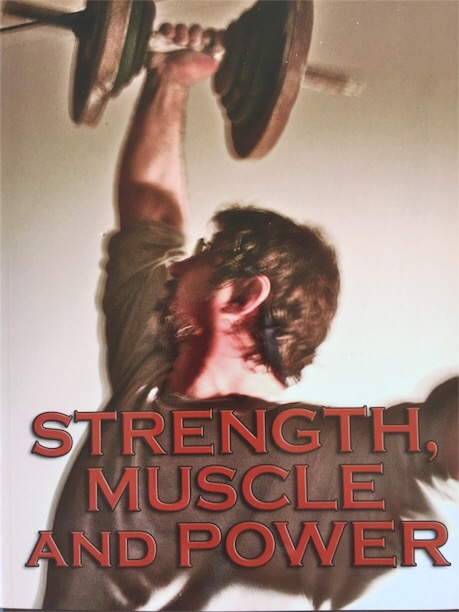
Strength, Muscle and Power


http://www.brookskubik.com/strength_muscle_power.html

Dinosaur Training: Lost Secrets of Strength and Development


http://www.brookskubik.com/dinosaur_training.html

P.S. 2. Thought for the Day:

"Necessity is the mother of invention - and a
guide to many fun and effective
exercises and
workouts."

- Brooks Kubik


BEFORE YOU LEAVE . . .

We have more than 25 Dinosaur Training books and courses in the Kindle bookstore - here are several of them - head on over and take a look at the others:


What Can We Learn From Old Time Barbells?

 
A high-quality Olympic barbell is a gem of a tool. But what was it like to train with old time barbells and dumbbells?


Hail to the Dinosaurs!

Two quick notes and then we'll talk iron -
as in, what we can learn from old time
barbells.

Notice that I didn't say "old time strong-
men."

I said "old time barbells."

Yes, they can tell us things - sometimes,
very important things.


1. Going Fast!

We're near the end of the run for Strength,
Muscle and Power
- and I'm not going to
print any more for awhile - maybe not
ever - so now's the time to grab a copy:


http://www.brookskubik.com/strength_muscle_power.html

It's a great book, but we're planning to
move out West - as in, to the Pacific
Northwest, and I can't print another
couple of thousand copies and bring
them with us. So, I repeat - if you
want a copy, grab it now!

2. The January Dinosaur Files

Go here to grab the January issue of
The Dinosaur Files. You also can grab
the Oct, Nov and Dec issues:

http://www.brookskubik.com/dinosaur_files.html

In the meantime, I'm pounding the key-
board to finish the Feb issue. So if you
have any comments or feedback - or an
update on your training - send it on it!

3. What We Can Learn from Old Time
Barbells


Back in the old days - as in, 120 to 150
years ago, there were no mass-market
barbells.

Back then, if you wanted a barbell, you
had to have it made at a local iron foundry.

And the barbells they made were very
basic.

Instead of plates, they had globes at the
end.

Hence the term "globe barbells."

Sometimes the barbell and the globes were
one solid piece of iron.

Other times, the globes could be screwed
onto the bars. That gave you the ability to
adjust the weight on the bar by changing
from one globe to another.

Of course, you never had too many globes,
so you could only make a couple of weight
adjustments - with big jumps from one
weight to another.

The globes came in  different sizes. Most of
them were round spheres - but some were
egg-shaped.

Some were made of iron. Others were made
of other metals.

And some globes were empty - so you could
add weight by filling them with sand or lead
shot.

But that was a time-consuming and cumber-
some process.

So the bottom line was this - your barbells
were pretty much fixed weight barbells.

If you had a couple of them, you might have,
for instance, a 60 pound barbell, a 100 pound
barbell, and a 150 pound barbell.

Or you might have a 100, 150 and 200 pound
barbell.

Or a 42 pound barbell, a 96 1/4 pound barbell,
and a 116 1/2 pound barbell.

Remember, these were essentially one of a
kind items - so there's no reason to believe
they weighed an exact amount.

And here's something else to consider.

There were no uniform specifications for the
size, thickness and length of a barbell.

So you might have barbells that were of
different lengths - and different thicknesses.

Your 80 pound barbell might be one inch
thick and four feet long.

But your 117 pound barbell might be 1 1/2
inches thick and six feet long.

In other words, every barbell was different
from every other barbell.

And sometimes, they were VERY different.

The same was true of dumbbells.

And your dumbbells might or might not come
in pairs.

Ditto for kettlebells and ring-weights.

And if you DID have pairs, they might not
be an exact match.

In short, all your weights were more or less
unique.

And adding more weight was difficult or even
impossible.

If that were the case, what would you do with
them?

How would you train?

Think about it - and send me a short email if
you have any ideas about it.

I'll share your feedback tomorrow - and
also share what I think the answer is.

In fact, I'll share what the answer MUST have
been - and explain why it was a GOOD thing
to train with such challenging equipment.

As always, thanks for reading and have a
great day. If you train today, make it a good
one!

Yours in strength,

Brooks Kubik

P.S. Remember to grab a copy of Strength
Muscle and
Power while the little monster
is still here:


http://www.brookskubik.com/strength_muscle_power.html

And remember to grab the Jan issue of
The Dinosaur Files:

http://www.brookskubik.com/dinosaur_files.html

P.S. 2. My other books and courses --
including links to all of my e-books on
Kindle -- are right here at Dino
Headquarters:


Hard-copy and PDF

http://www.brookskubik.com/products.html


Kindle

http://www.brookskubik.com/oldschool_01-kindle.html

P.S. 3. Thought for the Day

"Study old time barbells and dumbbells
closely and carefully. They can teach you
a lot."


- Brooks Kubik

BEFORE YOU LEAVE . . .

We have more than 25 Dinosaur Training books and courses in the Kindle bookstore - here are several of them - head on over and take a look at the others:


How the Old-Timers Trained

We can learn a tremendous amount about real world, drug-free strength training and muscle-building by studying the old-time champions.


Hail to the Dinosaurs!

I got an email the other day asking which of
my books and courses give the exact training
programs of the top old-time strongmen,
and Golden Age bodybuilders and weight-
lifters.

That's a good question, and it deserves a
multi-part answer.

First of all, everyone who has ever trained
has used many different programs over the
course of his career.

There's no way that Arthur Saxon or John Marx
always used the same workout from the first
time he touched a barbell until the day he
died.

There's no way anyone does. That's because
things change as you move from beginner to
intermediate to advanced levels of strength
and development.

Things also change as we age. I doubt that
many men have trained the same at age 60
as they did at age 20. I certainly don't.

Second, many trainees go to the gym with
a general idea of what they are going to
do, and then they vary the actual workout
according to how they feel.

So that makes it more or less impossible
to say they have a particular workout they
always follow.

Third, our records are very sketchy on the
old-timers. We may know something about
their workouts, but we don't always know
everything.

The old books and courses may give workouts
that the old-timers recommended - but the
recommended workouts are usually for
beginners.

The most important thing we gain from the
old-timers are training principles.

We can use those training principles to
create workouts of our own.

And that's what I do in all of my books and
courses. I don't give you the exact training
program that Eugene Sandow followed be-
cause there's no such thing. But I can give
you training principles that Sandow used.

That said, back to the question.

I think Strength, Muscle and Power and
Dinosaur Training are the best books to
get a good overview of how the old-timers
trained.

Strength, Muscle and Power, for example,
gives you a ton of training tips from Arthur
Saxoin, George F. Jowet, Herman Goerner,
Reg Park, William Boone, John Grimek and
others.

Both books also have exact training programs
to try.

So for anyone interested in the old-timers
and how they trained, you can't do better
than by grabbing Strength, Muscle  and
Power and Dinosaur Training.

Yours in strength,

Brooks Kubik

P.S. Go here to grab Strength Muscle and
Power.


http://www.brookskubik.com/strength_muscle_power.html

And go here for Dinosaur Training: Lost
Secrets of Strength and Development.


http://www.brookskubik.com/dinosaur_training.html

P.S. 2. My other books and courses --
including links to all of my e-books on
Kindle -- are right here at Dino
Headquarters:


Hard-copy and PDF

http://www.brookskubik.com/products.html

Kindle


http://www.brookskubik.com/oldschool_01-kindle.html

P.S. 3. Thought for the Day

"Study the strongmen of the past and
learn all you can about how they trained."


- Brooks Kubik

BEFORE YOU LEAVE . . .

We have more than 25 Dinosaur Training books and courses in the Kindle bookstore - here are several of them - head on over and take a look at the others:


Fast, Fun and Effective!

No time to train? Try this fast, fun and effective workout!


Hail to the Dinosaurs!

Someone asked for a good workout that
doesn't take a lot of time to complete.

He's like many of us - very busy with job
and family responsibilities, and not much
time to train.

Luckily, there's an easy solution for him.

I call it ultra-abbreviated training.

One exercise. Preferably a good one. Squats,
front squats, clean and press/push press,
deadlift, Trap Bar deadlift, or similar BIGmovements.

A quick general warm-up, followed by a
series of progressively heavier warm-up
sets, working up to your top weight for
the desired number of reps.

One, two or three sets with your top
weight. (And one is fine - more is not
necessarily better.)

A couple of sets of gut, grip or neck
work, and that's it.

Fast, fun and effective.

Hit it two or three times a week - doing a
different exercise in each workout.

I have a whole chapter on ultra-abbreviated
workouts in Strength, Muscle and Power -
which you can grab right here:


http://www.brookskubik.com/strength_muscle_power.html

By the way, we're down to the last couple of
boxes of Strength, Muscle and Power - and
I'm not going to have more printed in the
near future - and possibly not ever - so
if you want a copy, grab it now.

Yours in strength,

Brooks Kubik